This year’s Mineski lineup looks to be the most competitive Southeast Asian DOTA 2 roster for the current season of pro DOTA 2. Many fans and insiders are talking about how Mineski’s success might be short-lived because of the weak competition they have been up against recently, but we think that they will be more than able to stand up against international competition in the coming months.
To date, Mineski has qualified to 4 minor tournaments: the StarLadder i-League Invitational Season 3, the PGL Open Bucharest, the AMD SAPPHIRE Dota Pit League, and The Perfect World Masters. They will notably miss the first major tournament of the year, ESL One Hamburg 2017, having been eliminated by Fnatic in the Southeast Asian Qualifier.
But let’s not dwell too much on their elimination as it was an outlier in the face of overwhelming dominance. At every other turn, Mineski batted down their opponents, and there’s a method behind this consistency. Here’s exactly why Mineski’s not Faceless 2.0 at all.
Mineski’s Lineup Is Built To Win
No matter how hardcore a fan you are of Faceless, you cannot deny that they were not a serious team. Last year was a break year for Daryl “iceiceice” Koh Pei Xiang, having returned from his extended international Dota 2 campaign as well as becoming a newlywed.
When it was confirmed that he had joined up with Toh “xy” Wai Hong” and Wong “NutZ” Jeng Yih, you could not help but see this as a final hurrah for the glory days of Singaporean Dota. However, great things still came out of this unorthodox partnership.
Enter Anucha “Jabz” Jirawong, who was clearly the SEA rookie of last year. If his mid play was shaky, that was simply because he was hiding his talent as an insane 4 position player. His deep hero pool for the position, as well as his expertise with uncommon picks like Io the Wisp shone through in his time with Faceless.
Comparing the TnC vs Faceless matchup to today’s TnC vs Mineski matchup, you can see how much more versatile and creative Mineski can be with their picks to eke out a draft advantage. Mineski also has the added advantage of having must-ban heroes from three out of five players: iceiceice, Chai “Mushi” Yee Fung and Jabz.
Mineski’s exploring creatively, quicker
It’s been a challenging month for Mineski, but they have performed consistently well whilst still managing to explore a playstyle for their team. Faceless characteristically stuck a few “tried-and-tested” heroes for their players, and it showed in their pick diversity:
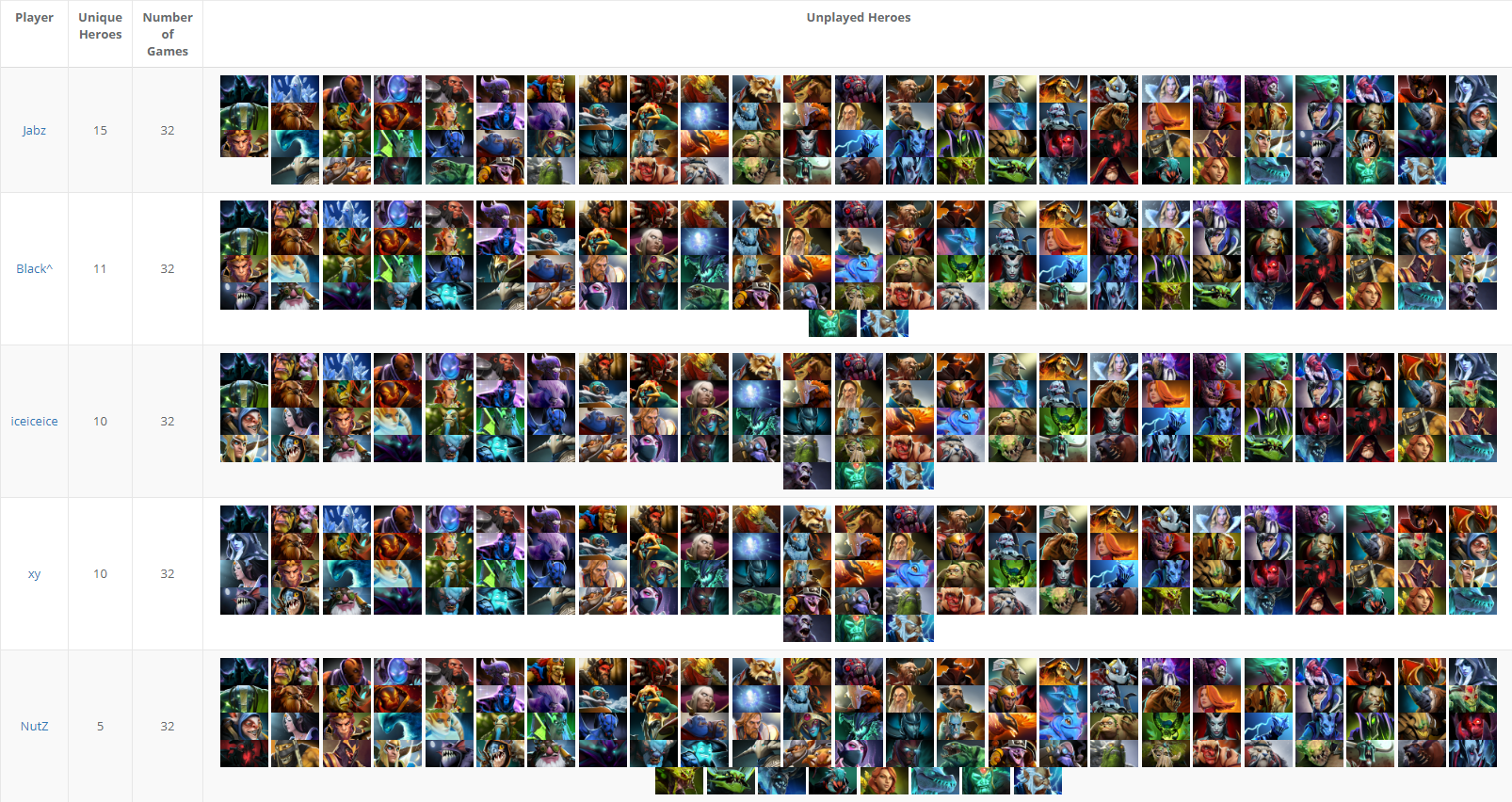
In comparison, Mineski demonstrates much more pick diversity across cores and supports even though they are playing important games (read: qualifiers). Normally, you would see a roster in its infancy repeat multiple comfort picks for their players, but it seems that Mineski is consistently avoiding this bad habit.
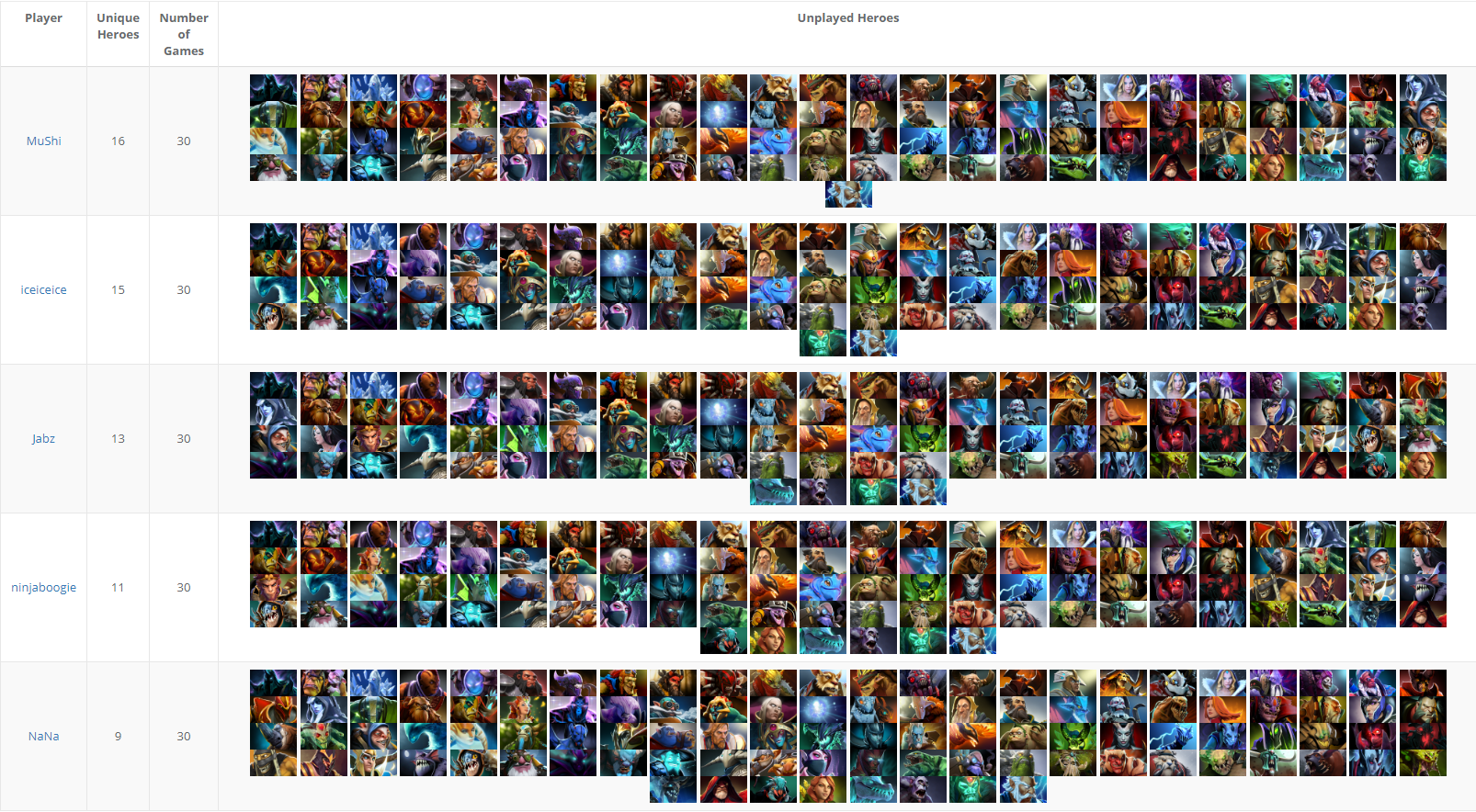
Notably, even ninjaboogie maintains a good 11 unique heroes picked in spite of a relatively shallow position 5 hero pool this patch. There are currently 10 – 15 flexible position 5 picks which work well without specific strategies, and we expect that ninjaboogie will pick up on unique heroes once the new patch hits.
We are expecting Mineski to perform much better against international competition given their versatility with heroes whilst still maintaining a good degree of success. This is, after all, 40% of the legendary team DK way back in 2014. One notable point of weakness however, is NaNa, who notably lacks significant international competitive experience.
They Are Elevating Their Competitiveness
According to sources close to the team, Mineski will be going on overseas bootcamps specifically to train with international teams to maintain a higher level of competitiveness. This solves a long-standing issue that South East Asian teams face – the lack of quality scrim opponents that are comparable to international competition – given the dwindling number of regional tournaments and veteran players.
A lack of tournaments also contributes to a longer-term problem: no new players. A Singaporean DOTA 2 pro made the observation that as Singapore’s LAN scene died down, the lack of a place where veterans could mentor new players caused our grassroots scene to lose its competitive edge and community altogether.
Thankfully, the new circuit system looks to be a boon that might be the start of a second sunrise for SEA DOTA 2. Multiple Minor tournaments have already been announced for the region, including one coming up in Singapore in January 2018.
2 Mineski Players Are On A Timer
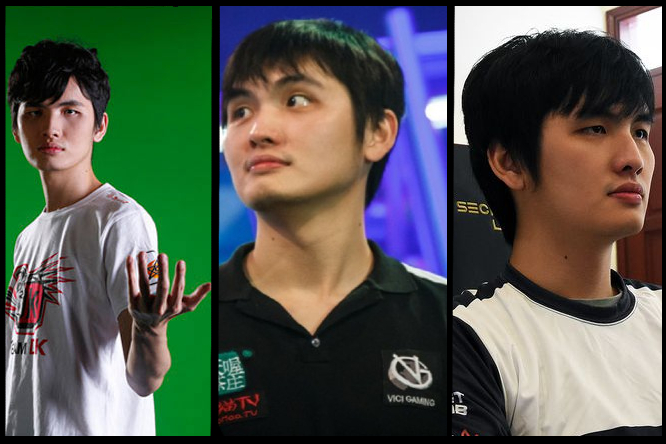
Like it or not – SEA’s finest players are aging. It’s nothing dramatic, but time and time again in the history of Dota has proven that younger blood runs hotter. The oldest player to win The International was Clinton “Fear” Loomis at age 27, which both iceiceice and Mushi will be this year.
Age brings experience, and with it, fittingly, fear. Younger players often take risks that make or break games, and oftentimes come out on top, given their confidence. Syed “SumaiL” Sumail Hassan, Amer “Miracle-” al-Barkawi and Anathan “ana” Pham have all made those game-winning plays for their respective teams.
Veteran players tend to play safer, playing to exploit mistakes that their opponents make whilst taking as little risks as possible. LGD at TI4 showed their veteran confidence in their strategy by mounting the largest comeback in The International history. EG at TI6 made a similar showing by holding on through mega creeps against EHOME.
One thing to note was that iceiceice was on both losing teams. Will Mineski change his and Mushi’s luck? Catch Mineski’s first international appearance come the StarLadder i-League invitational on October 12, 9pm SGT!
Linked from: Spout360