Simply put, the Outer Worlds is a fuss-free, play-however-you-want game that walks the talk. You don’t feel punished for doing something that the game allows you to. Sure, you might miss things, but that’s what a second playthrough is for. (I played through this game 3 times)
2. Total War: Three Kingdoms
This newest addition to the Total War franchise was something to behold and ran its course quickly enough. I spent 300 hours on it, before getting bored of the unit and building variety. Economy-building is extremely important in this iteration, but also very tedious.
3. Baba Is You
Although I didn’t manage to play Untitled Goose Game, Baba Is You was the most charming indie puzzle game I played in 2019. You know a game is hella innovative when the base mechanics allow for multiple solutions to a single puzzle that the developers likely did not explicitly design for.
4. Slay The Spire
Okay, I was playing this game since beta, but the full release warranted a fresh playthrough again. The game was even more fun, with the added mechanics and new treasures.
RNG is king in this game, which makes each playthrough extremely varied.
5. Civilization VI: Gathering Storm
The expansion made me go 2 days without sleep. If any game has mastered “one more turn”, it’s the Civilization series. Play this game not for the challenge, but for the personal story you’ll experience as you go through the ages.
Games Released This Year That I Played but were Forgettable in Comparison
6. Borderlands 3
In the first 30 hours, the game was fun enough to get through. After that, it’s like an MMO grind that isn’t as rewarding somehow.
Might be the loot quality or just the feeling of the upgrades not mattering as much, but it just stopped being fun too quickly.
7. Mechwarrior 5: Mercenaries
This is an okay game, but I would not play through it again due to the lack of polish and innovation.
It’s a modern Mechwarrior that somehow has less features than its predecessors. A disappointing wait for a game that could have so much going for it.
Games I’m Still Playing with DLC released this year
8. Total War: Warhammer 2
To date, largely thanks to the modding community, I’ve sunk 1,039 hours into Warhammer 2. I also do playthroughs of all the new DLCs — the gameplay between each new faction is just fresh enough to keep me coming back for more.
9. Battle Tech: Heavy Metal
Probably the best entry to the Battletech franchise these past 5 years. I’ve lost so much gameplay data through mod compatibility it’s not a joke. Of the 400 hours I’ve invested in Battletech, the only save file I can still use is 10 hours old.
However, I still play the game because it’s just fun.
Games I reinstalled because I couldn’t find any equivalent games to
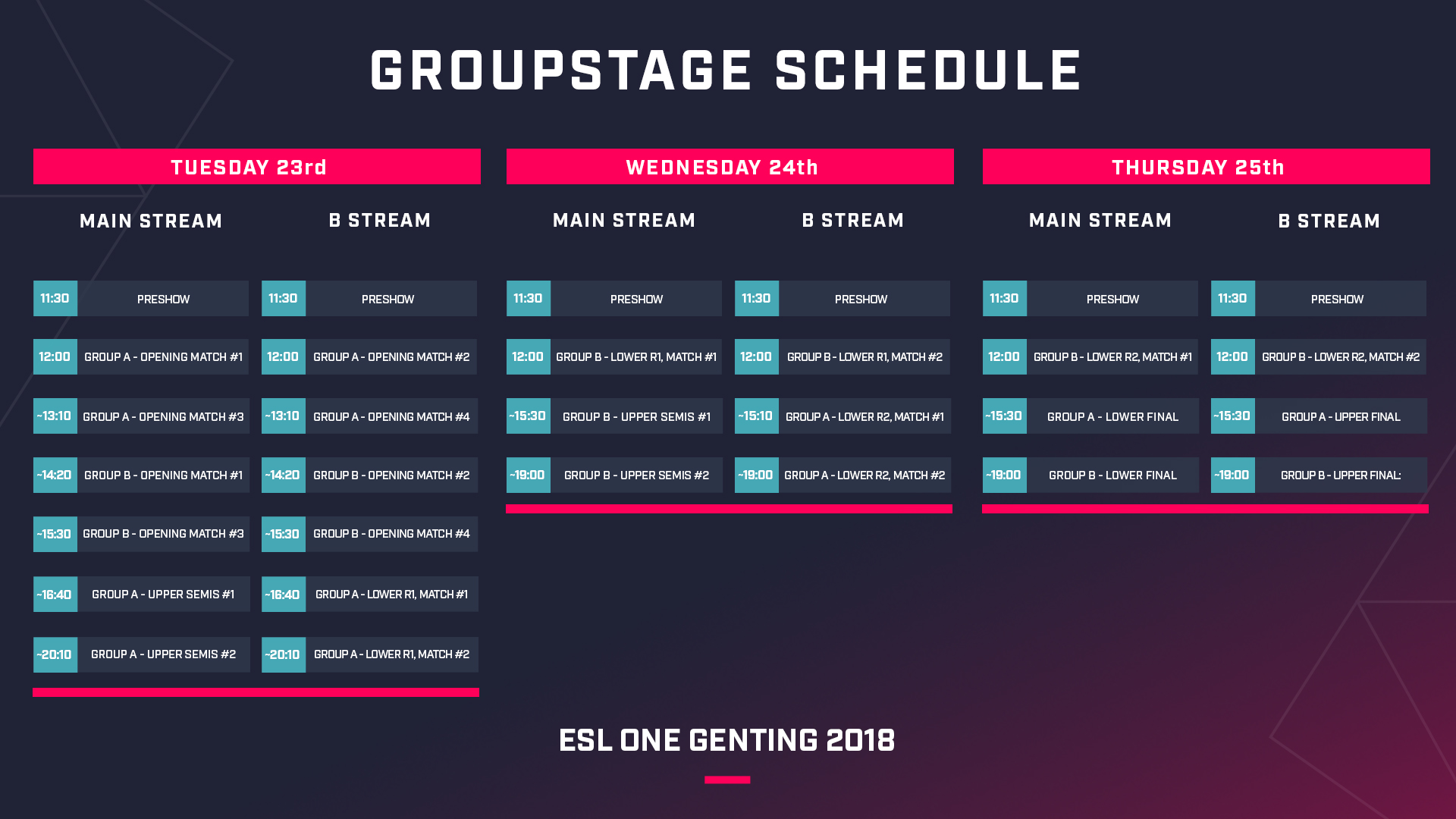
With Malaysia’s first ever Dota 2 minor just on the horizon, we weigh in whether it’s possible for TNC or Mineski to take it all.
At ESL One Genting, SEA Dota 2 isn’t looking quite so good. Overall, Dota 2’s gameplay meta has shifted to favour teamfights, and European Dota 2, which is currently the dominant playstyle, is hard to find practice against for SEA teams.
The Thirst for Skill
If there is one thing that SEA Dota 2 is known for, it’s aggression. Pitting hot-headed, young and eager gamers in a region scattered by language barriers only meant that the preferred form of communication became skill. In public matches and even casual tournaments, it’s common to see SEA players constantly trying to one-up each other, which translates into killing the opposition.
This thirst for glory naturally gave birth to perhaps one of the most mechanically skilled generation of Dota 2 players. Sure, you have your Miracle-s, SumaiLs and w33has overseas, but in SEA, there were teams upon teams of mechanically gifted Dota 2 players who purely relied on outplaying to triumph the opposition. Ultimately, this was the main reason why the hierarchy for SEA teams was so clear.
Fast forward to 2017, it has become insanely difficult to outplay opponents as they are themselves the very best in their own regions. These players, in the form of Team Liquid, Secret, Virtus.pro, were equally if not, much more skilled than SEA teams. These international teams, supported by a superior infrastructure and culture of understanding overall, should have utterly destroyed any hopes of SEA Dota 2 ever making its mark on the international stage.
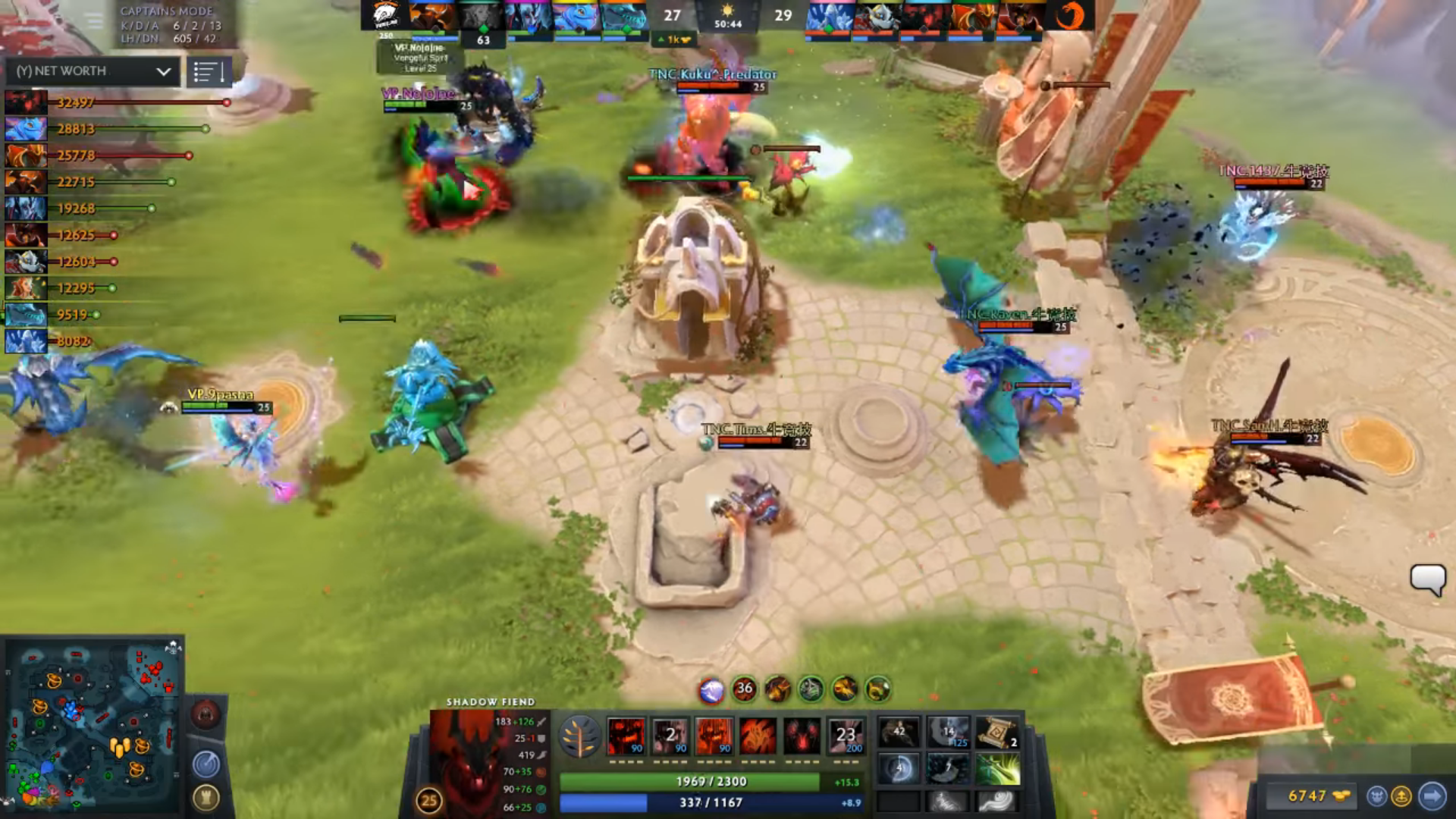
Yet, that did not happen. In both current and previous seasons of Dota 2, SEA teams have managed to pull off some of the most spectacular games and tournament performances. In recent memory, TNC managed to close out Virtus.pro convincingly in the semi-finals of MDL Macau 2017 2-0. When we view the game, the reason becomes apparent.
There’s a secret sauce to beating teams: play to their weaknesses. However, in this case, Virtus.pro (VP) tried to play against TNC’s strengths, engaging them in multiple early game fights. VP’s reputation as an early aggression team was true to its name, but it was also their failing as TNC demonstrated better teamfight execution, likely honed over the many years of SEA matchmaking games.
TNC also showed off an interesting strategy utilising a spellcaster Shadow Fiend (with his new 40% cooldown reduction talent), which meant that VP had to break through Kuku’s wall of damage reduction and magic damage to win teamfights. VP drafted well for the meta, but TNC built up items which allowed their heroes to survive longer, which countered VP’s overall strategy of eliminating singular heroes quickly.
The following game was TNC’s demonstration of confidence after a steady game 1 win. VP looked shaken as TNC managed to outmanoeuvre the best CIS team in the world to take the game 2 victory in just 25 minutes after a 51 minute-long game 1.
VP engaged TNC on equal ground, and lost. This will apply to every match both Mineski and TNC plays in ESL One Genting. However, simply avoiding the aggression of SEA teams is not enough for a game-winning strategy. A second measure is needed.
The Demand for Teamwork
For European(EU) teams, Dota 2 is more about co-ordination. Sure, there are the stars who want to shine, but overall, the pace of high-level EU public matchmaking games mimic that of a TV series: there’s a star, a co-star, and the supporting cast. The star (Carry) and co-star (Mid) will dominate most of the spectacle, while the supporting players (Offlane, 2 Supports) simply do their jobs (in lane and in teamfights) and collect their result at the end of the day.
This is a far cry from the glory-seeking SEA or CIS public matchmaking culture, which has built up an amazing level of co-ordination and teamfighting ability in EU Dota 2 players. At the core of EU Dota is a series of teamfights that wins the game, and every EU Dota 2 team has that in them.
Team Liquid, in their TI7 and recent minor wins, has shown that EU’s brand of Dota 2 succeeds. Indeed, throughout the myriad of changes Dota 2 has went through, one thing remains for certain: the game is shifting to favour teamfight victories. More precisely, the game favours perfect teamfights, where one team kills another without losing a single member.
For such a teamfight to happen, teamwork is key. Spreading damage, collapsing on stray opponents, using crowd control (slows, stuns and other effects) to prevent effective retaliation is often a huge part of EU Dota 2 teamfights, and less so for SEA Dota 2 teamfights, where an immediate kill is preferred. Over here, the teamfight boils down to the first death. In EU, the teamfight boils down to if the star and co-star gets to receive the final victory, with each other player being expendable.
Observable Tendencies
See this for yourself: In any SEA Dota 2 game, when a SEA team gets a kill against another team, they will often surge forward to seek the opposing team without abandon. Conversely, when they lose a member, they will try to regroup quickly. When tournament nerves strike, each SEA team will demonstrate these tendencies, defaulting to withdraw once they have lost a teammate.
For EU teams, a kill will cause them to move towards an objective instead of seeking out their opponent’s heroes, and a dead member might be an opportunity to start a game-winning teamfight, or simply be a signal to withdraw and defend.
On the professional level, while SEA teams are still trying to adapt to European teams, they still lack the appropriate practice partners to adjust their strategy and intuitions about the game. Similarly, for European teams, they are already well positioned to take the tournament in the current patch. This strategy has worked for them since, and barring any surprises, will continue to work.
Here’s hoping our 2 SEA teams have a few cards up their sleeves to surprise us at ESL One Genting!
Originally published on Spout360 (site now offline).
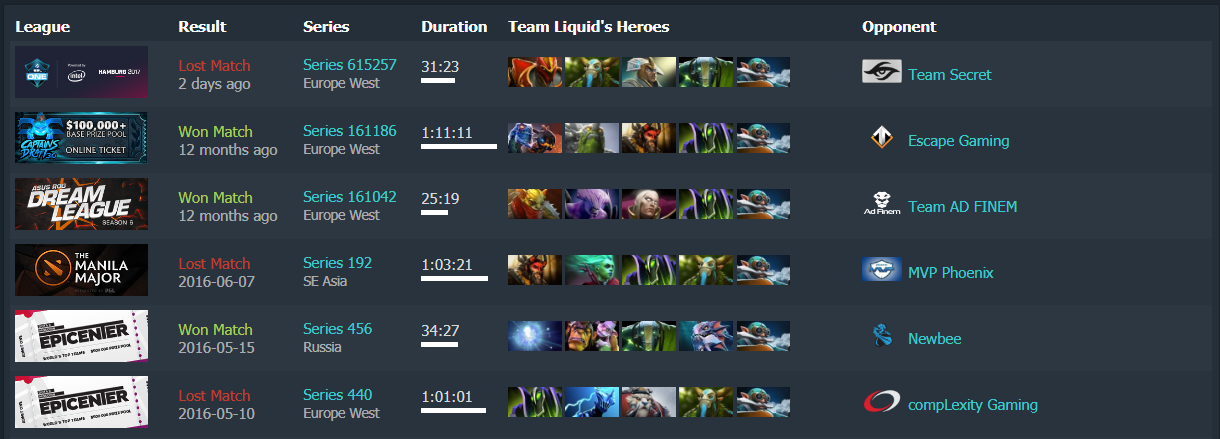
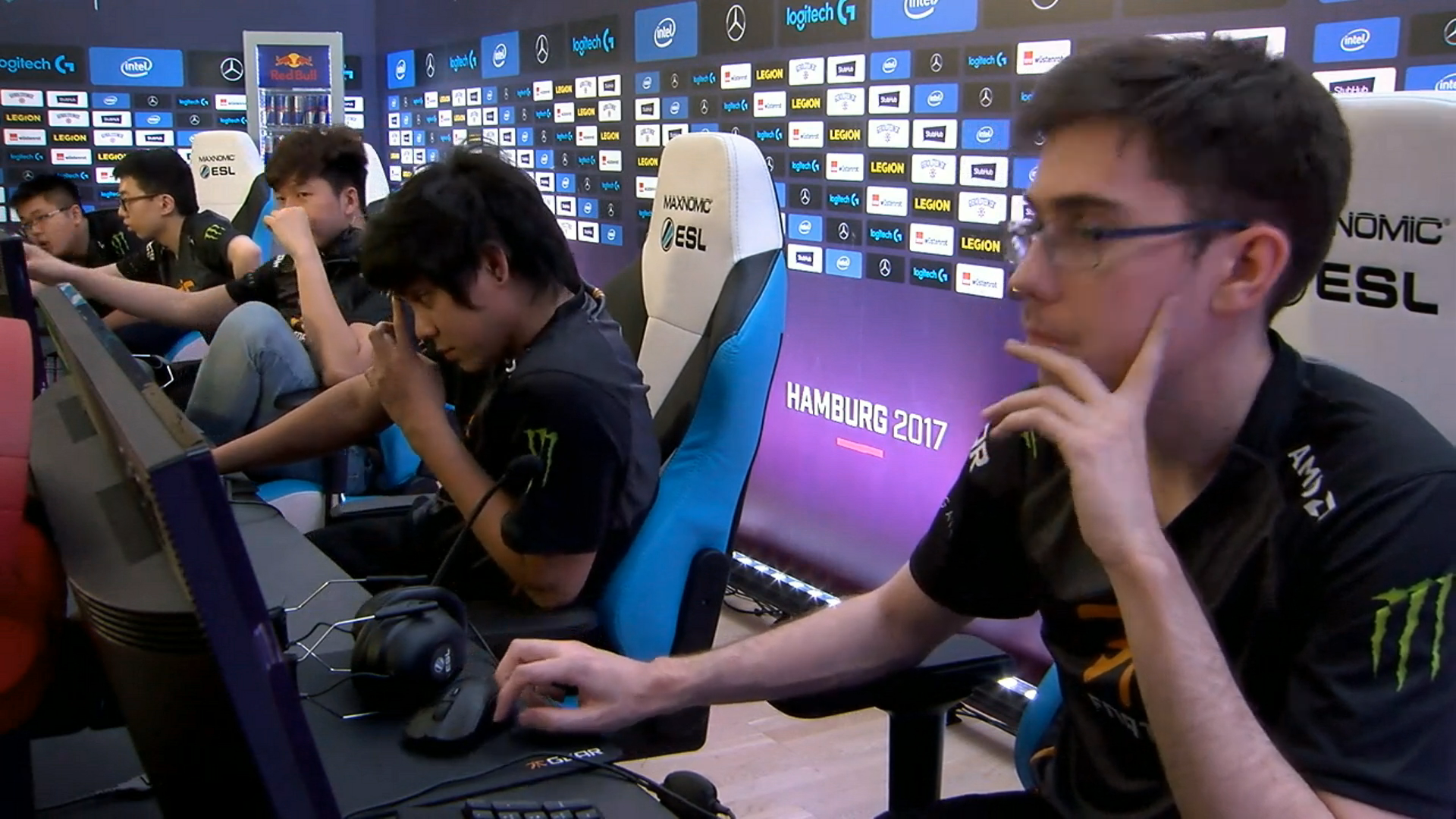
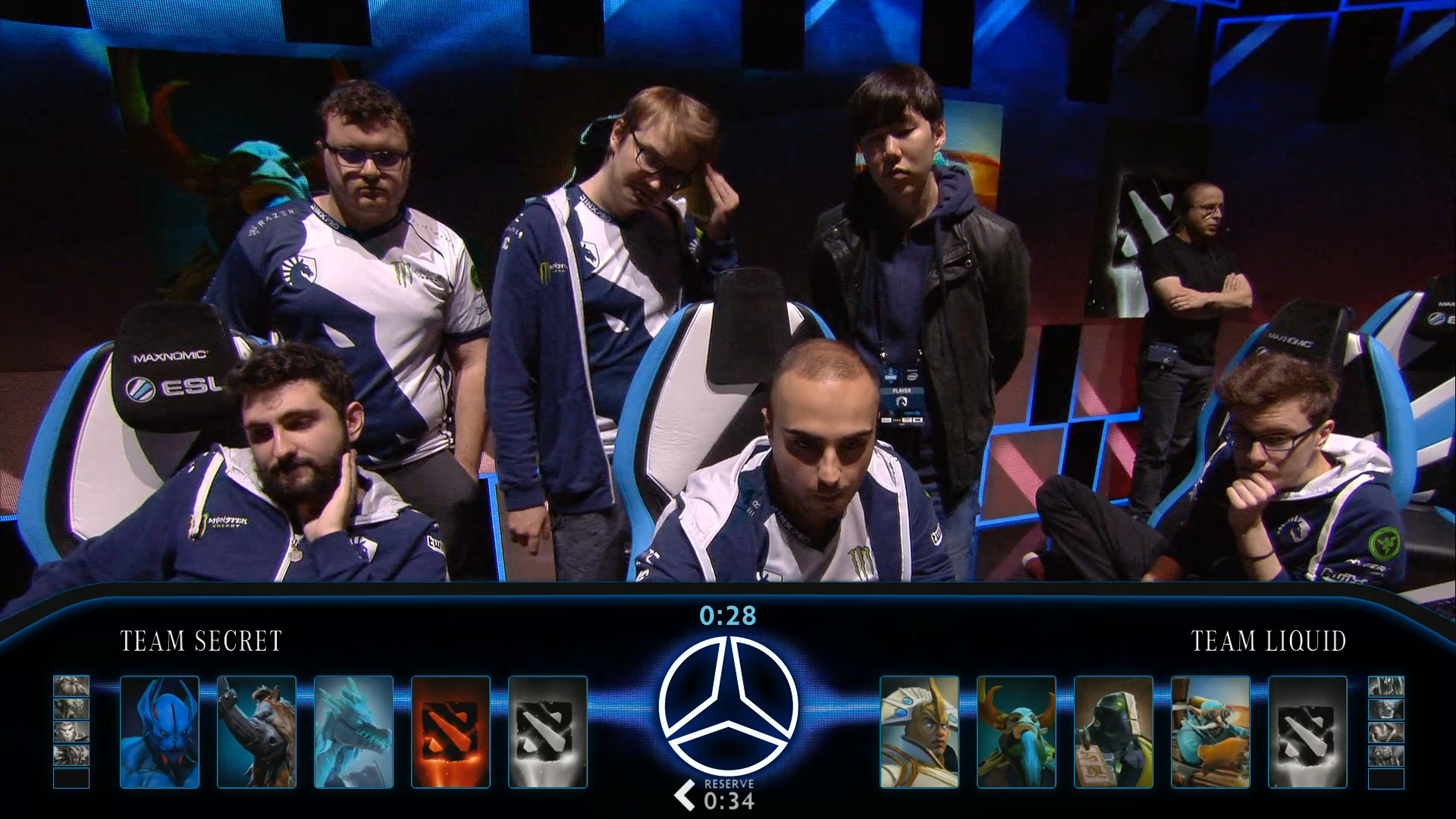
The final Dota2 tournament on patch 7.06 concluded in an epic 2:0 win by Team Virtus.Pro, but it was Team Secret that showed us the most amazing storyline for the tournament. The Europe-based international team eliminated Team Liquid in a 2-1 comeback sweep, unexpectedly forcing this year’s The International Champions to miss out on their first major win of the season.
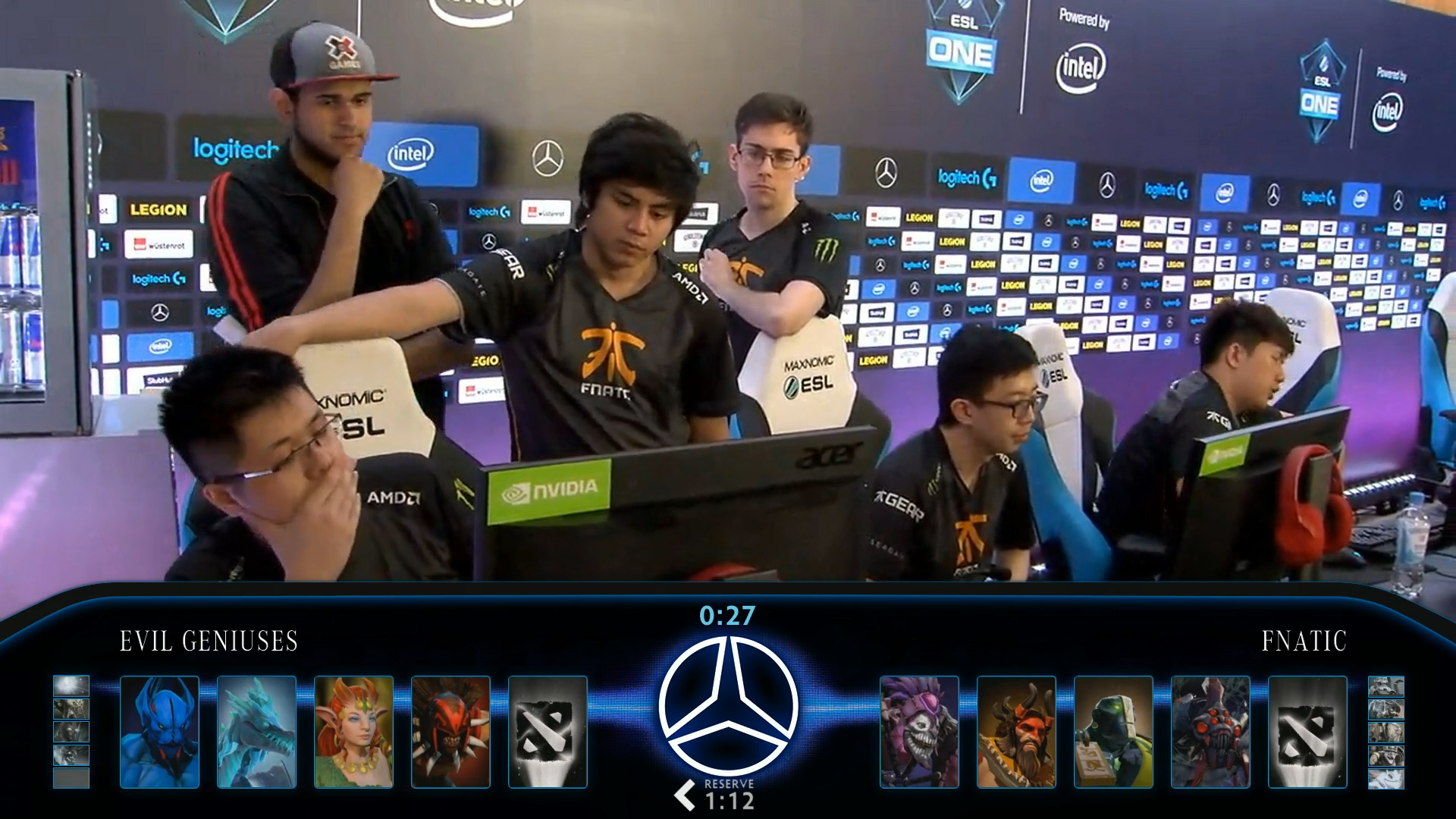
Our SEA representative Fnatic managed to put on a good performance against a much stronger Newbee team, but could not get a good strategy to close out the game. Their game plans were also completely upset by EG in their elimination match, and we saw Fnatic bomb out in just under 40 minutes with a 2:0 loss.
Tournament Woes
ESL One Hamburg was the first ever major tournament of the season, and all eyes were on them to put on a great show. Production-wise, the tournament was put on smoothly with analyst panels, stage interviews, but the 15- to 20-minute down time betweTeamen games accumulated into a 6-hour day 1 for only four best-of-one matches.
Their format of choice, 4 best-of-ones seeding into a direct single elimination bracket was also made for a relatively match-light major. The tournament only saw a grand total of 25 games played, a far cry from the previous major, which had over 40 games played.
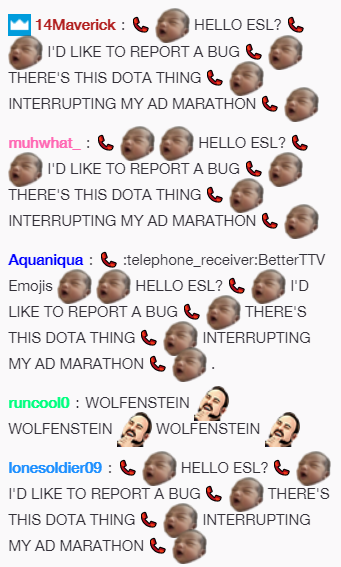
Day 1 set some pretty low benchmarks. With an average game time of 32 minutes, roughly three and a half hours were spent on Dota 2. The rest of the time was spent on advertisements, which resulted in this:
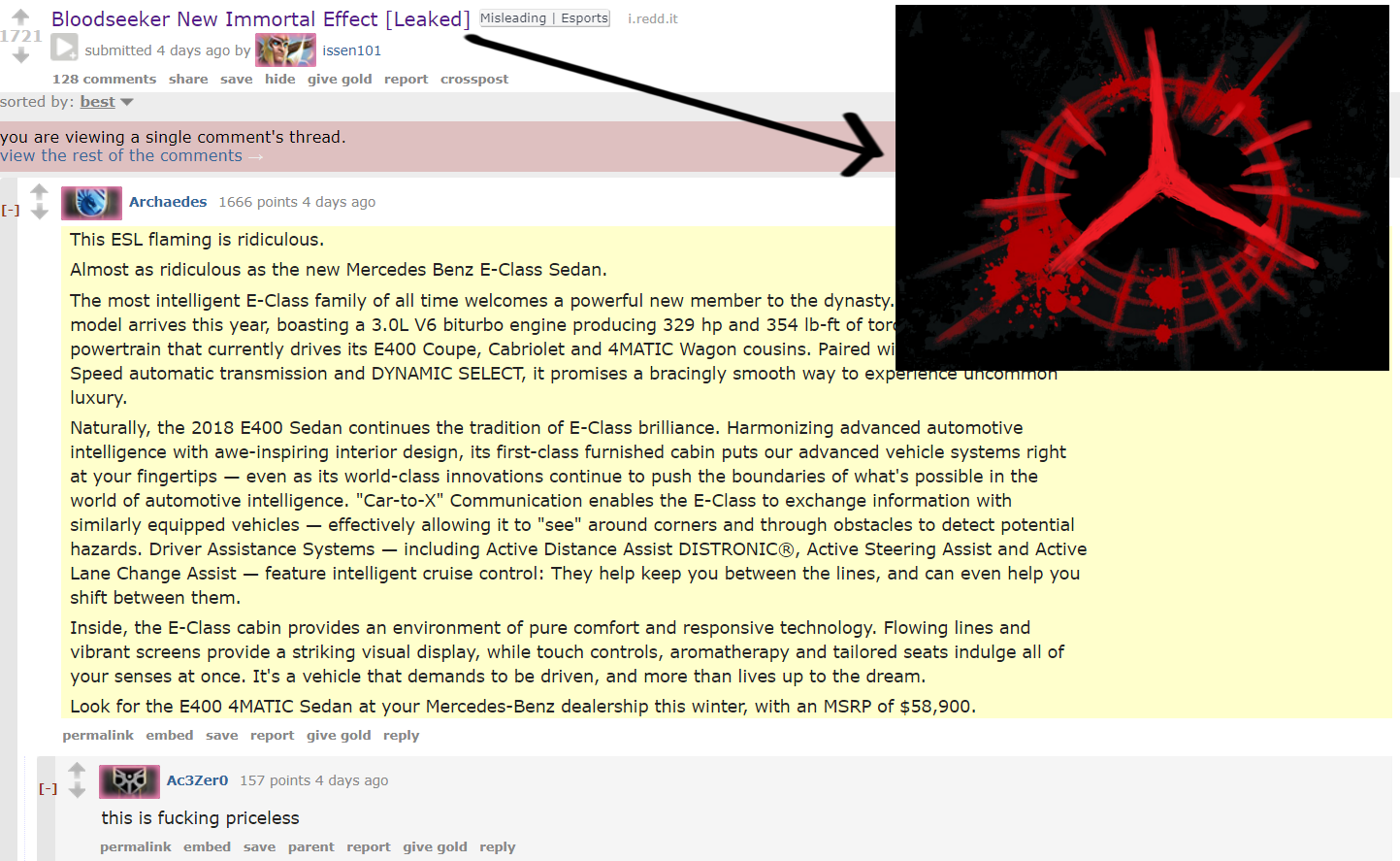
Mercedes also had a pretty condescending advertisement to show to gamers in their maiden audience-specific ad which played for the entire weekend:
Which led to these amazing rebuttals in response to Mercedes’s seemingly out-of-touch marketing:
The lack of content was also felt as beyond their panels and their honestly amazing hype videos, ESL had nothing else to fill in the downtime. This contrasted with the Starladder minor, which had some pretty sincere fan-pro player content:
This was Fnatic’s first appearance in an international tournament but they looked unprepared to take on their opponents. They were last-minute replacements for HappyFeet, who suffered from visa issues and were thus unable to travel.
Even in SEA, Fnatic looked extremely shaky, failing to stand up against SEA’s dominant teams such as Mineski, TNC and Execration. Due to their 3-loss drop in ESL One Hamburg, they are currently on a 5-game losing streak, having already lost 18 games out of their 34 played as a roster.
Against Newbee, Fnatic made a bad draft against Newbee, picking up an early Anti-Mage into a hard counter Bloodseeker carry. With an Anti-Mage in the draft, Fnatic was invested in a 4-protect-1 strategy, as observed by panellist Troels Lyngholt “syndereN” Nielsen:
This meant Fnatic had to pick early game heroes – who rely on high-damage magical spells – to hold back the enemy in the early to mid-game to ensure their Anti-Mage has the time to grow into an unstoppable carry. Unfortunately, Newbee’s heros all had a skill to deal with magic damage, and their fourth-pick Omniknight sealed the game for them.
This early game teamfight showed how much of an advantage Newbee’s draft had against Fnatic’s as even after getting managing to sandwich Newbee in, Fnatic simply could not deal with the myriad of counters Newbee had against them:
This small advantage quickly snowballed Newbee, who ran away with the game. Fnatic made some excellent strategic calls and managed to catch Newbee off-guard many times such as here:
But Newbee’s draft simply was too much for them to deal with.
The same draft problems surfaced against Evil Geniuses, and Fnatic lost in 24 minutes and 15 minutes respectively in games 1 and 2. Even so, Fnatic showed some promise in terms of the plays that they were able to make even while behind, but their drafting needs to catch up with their own play expectations in order for them to produce some results.
Secret’s Amazing Plan
In spite of their recent success, Team Secret was not expected to do as well as they did in this tournament given the quality of teams there. Infact, once they drew Team Liquid as their semi-final opponent, not many people were expecting them to come out on top.
This is what made their upset all the more amazing. Team Liquid, usually composed and clutch even under high-pressure situations, made plenty of errors in games 2 and 3 of their semi-finals match against Team Secret.
You couldn’t have written the script any better too – this was also Puppey showing up his ex-Na’Vi teammate and saying that he, too, could lead his team to victory.
Game 2 was where it all started to roll downhill for Liquid with a questionable Gyrocopter draft. The hero had not been picked in recent memory; in fact the last time Liquid played Gyro in a professional match was last year!
Needless to say, even though Team Liquid applied the hero well in the initial stages of the game:
Their lineup was outscaled by Team Secret’s Phantom Assassin in terms of dps and Bristleback in terms of survivability. Team Liquid might have been theorycrafting the Gyro against the Wyvern, but their Dragon Knight pick did them no favours against the percentage-based hp scaling damage that Wyvern had in her Arctic Burn skill.
Team Liquid was looking for solid answers throughout the draft, but those answers never came. The champions looked out of it in spite of a solid game 1 performance:
And they didn’t manage to recover. Catch both Fnatic and Team Liquid at next Dota 2 minor at Dota Pit, happening at Split, Croatia on November 2nd, 7pm SGT!
Last weekend, Mineski proved that they’re a threat on the international Dota 2 stage by convincingly taking the PGL Open Bucharest in a 2-0 sweep of LGD.
They weren’t the only South East Asian stars at the event, however, as Immortals (IMT) also surprised spectators and commentators alike by putting on a performance reminiscent of their TI6 run.
Immortal’s Gameplan
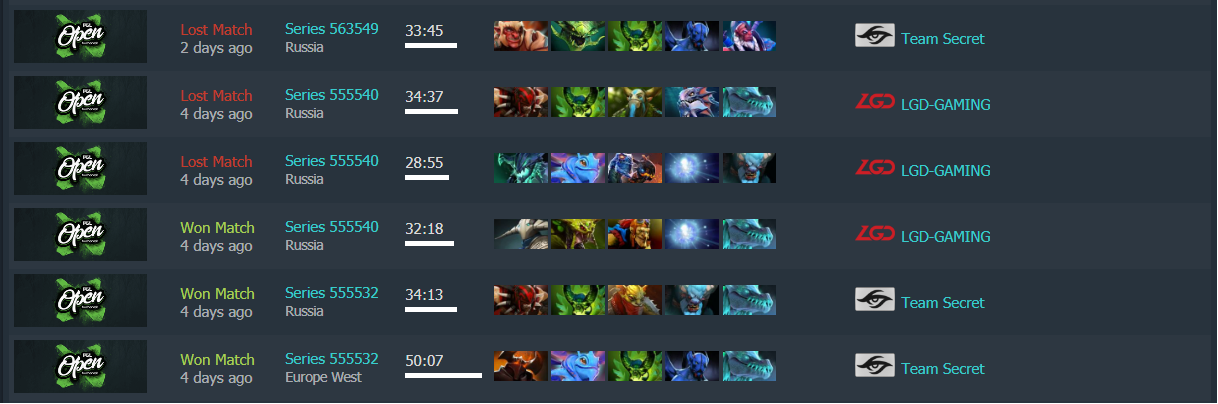
The yet-unproven IMT ran through Team Secret twice in the group stages to secure themselves a minimum 3rd/4th placing, to the disappointment of a proven Team Secret, who placed 3rd/4th at the Starladder i-League Invitational Season 3. Team Secret struggled hard against the fast tempo play of IMT but even though they lost, their one won game gave us clues into what IMT was weak against.
Heroes that game the opposing team a clear teamfight advantage (Monkey King Ultimate) were very good at punishing the extended teamfights IMT would usually take. Even though the game was a draft win by Team Secret through the Meepo last pick, Secret’s other heroes worked well to delay the IMT snowball.
IMT’s hyper aggressive style centers around their star carry, QO, who exclusively plays mid DPS heroes. IMT was amongst the first teams to incorporate lane swaps for favourable lanes into their main strategy, prioritising winning lanes in other to secure a good early game.
Winning the early game meant that IMT could start snowballing their advantage into the mid-game, and in this tournament, Team Secret fell victim to this snowball, with Mineski very nearly falling prey as well.
IMT had the most success when they were able to get heroes who are great at picking off heroes on their own: Bloodseeker, Phantom Assassin and Chaos Knight.
The 3 heroes mentioned also have incredible survivability, which allows IMT to have more longevity in fights. The Korean team showed incredible teamfight co-ordination and often outplayed their opponents, maximizing the potential of their heroes.
We saw Immortals have much less success with the heroes that relied on outscaling the enemy, as these heroes, like Troll Warlord or Outworld Devourer for example, would be too reliant on QO getting farmed, and thus being unable to help his team in the earlier fights.
Mineski’s second draft against IMT in the semi-finals mirrored IMT’s concept with the Monkey King, Mirana and Pugna core, heroes which could either heal or escape from enemies easily. The ninjaboogie Silencer limited IMT’s burst potential, and directly countered 4 out of 5 IMT heroes.
Mineski’s Dominance
At the start of the season, commentators and fans alike did not expect Mineski to do as well as they did. Mineski’s 2-0 performance during the group stages against Evil Geniuses and Na `Vi solidified their position as a frontrunner for the entire tournament, with Immortals following closely behind.
Kam “NaNa” Boon Seng (tagged as “Moon” in the tournament) also proved that he was more than capable of standing against the best mids during this tournament, outlaning and outplaying SumaiL in an early game gank.
NaNa held together Mineski’s tempo extremely well on heroes such as Puck and Mirana, but he only found success on the two heroes, which were presumably his most comfortable picks. Whenever Mineski deviated from either hero, NaNa’s performance would suffer, and they would consequently lose the game.
NaNa only played 4 unique heroes in the tournament, repeating Puck and Mirana 8 times over 10 matches. While this might be a sign of a shallow hero pool, we’d like to think that Mineski is exploiting NaNa’s ability to control tempo on these two heroes as a tool to win games win.
With Mineski now at 750 points, they technically have 29.1% of the points needed to reach ‘quota’ and qualify for TI8. Similar to voting, once Mineski gets a big enough portion of the points, they will automatically qualify no matter how well other teams perform.
This quota will reduce as other teams start to win majors and minors and split up the point distribution beyond 8 teams. This is because some Qualifier Points will become “dead” points as teams below top 8 fall out of contention, and thus reduce the points needed to reach quota for top 8.
It is also significant to note that the top 3 players with points will be used to calculate a Team’s point total, meaning that players in high-performing teams who are kicked mid-season can still band together and get into TI8 through their accumulated points.
Sadly, we won’t be seeing the SEA favourites at the first ever Major of the year at the ESL One Hamburg. Fnatic will be representing the region, though, so you can still cheer for our region on 26th October 2017, from 7:30PM onwards!
Originally published on Spout360 (site now offline).
A second place finish in the first Dota 2 minor of the season is no mean feat, but can SEA’s best TI8 contenders beat their demons?
Make no mistake: Mineski is not far behind their rivals, but they seem to be lacking the final ingredient to vaccinate themselves against the EU invasion. Twice, Mineski came close to winning starladder, but were denied at each turn.
Losing to this year’s The International champions is nothing to complain about, but the context is important. At the start of each season is when SEA teams are the strongest and other regions are the weakest.
While the new patch has yet to hit, Europe as a region is the bogeyman for the other Dota 2 regions, especially SEA’s. Here’s why.
Europe Rising 2016 – 2107
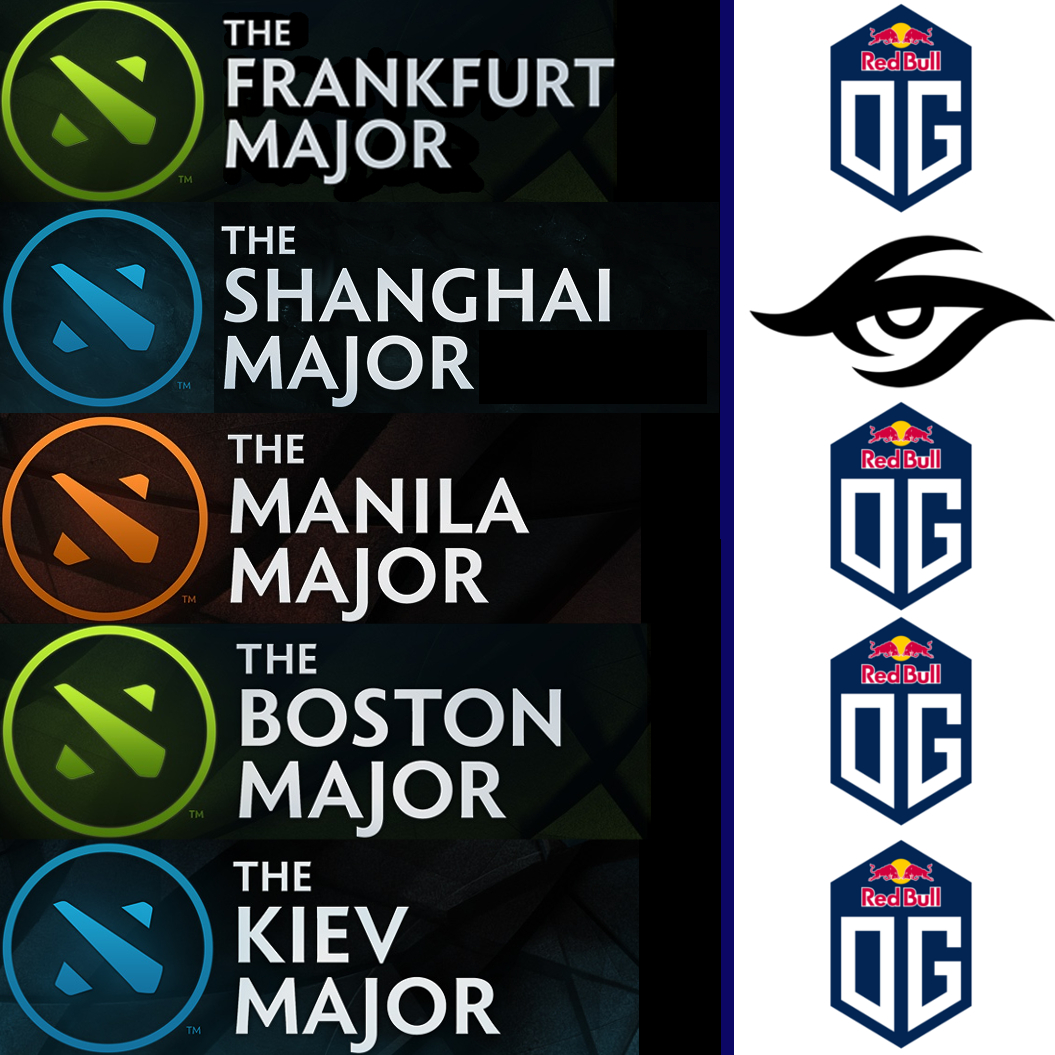
For the past season, Dota 2’s European teams have consistently been producing results at the highest level of competition. Team OG stands as the best example of European dominance, with 4 Major wins under their belt.
Caption: Each Major was won by an European Team / Credit: Valve
In Dota 2, team performances can be cyclical as they go into slumps and recover. However, Europe as a region seemed to cycle quicker against the other competing regions. To date, every Dota 2 Major has been won by an European team, shadowed closely by the CIS region.
Even China, who were at first considered to be the most dominant region in the early years of Dota 2, has been falling behind. The disbandment of TI6 champions Wings Gaming did not help the region as fans were up in arms about the events that surrounded this disband.
Today, South East Asian Dota 2 is haemorrhaging new blood due to other games having incentives to compete and a more structured local competition circuit.
Draining SEAs
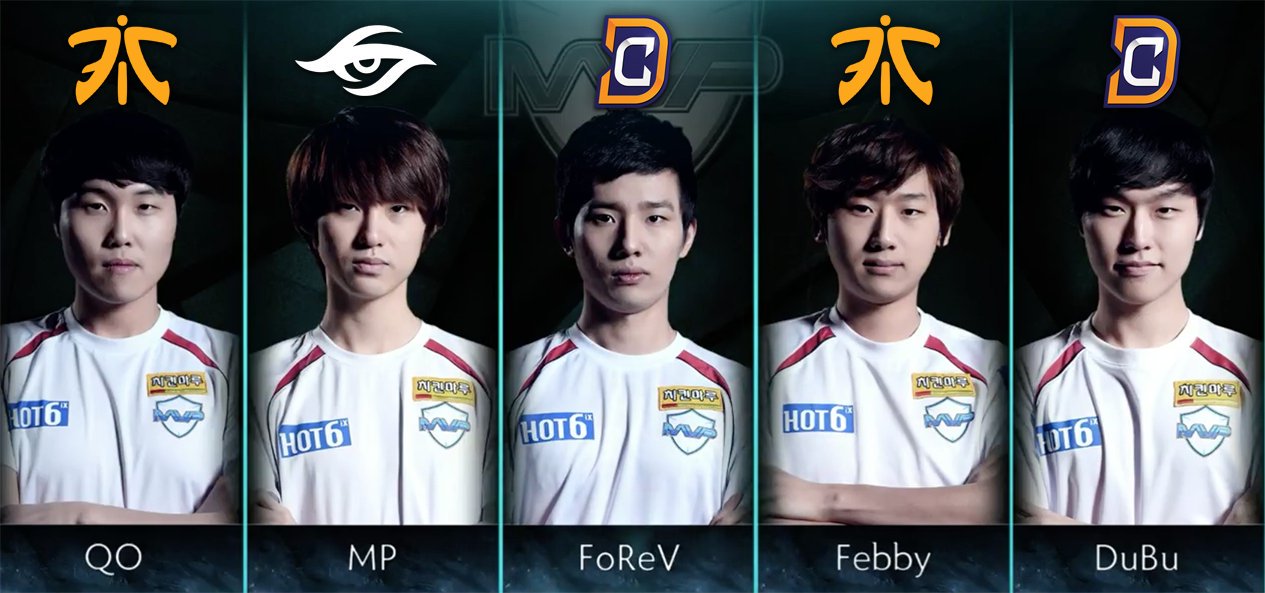
2016 saw the migration of several South East Asian talents into Europe and America, namely MVP’s Lee “FoReV” Sang-don and Kim “DuBu” Doo-young going to Digital Chaos (America), Fnatic’s Yeik “MidOne” Nai Zheng moving to Team Secret (Europe) with MVP’s Pyo “MP” No-a.
Caption: Each ex-member of Team MVP, who got 5th – 6th place at TI6, managed to qualify to TI7. / Credit: Wykrhm Reddy
This exchange is particularly significant in making the other regions more comfortable in playing against South East Asian Teams. International teams would often be surprised by the different playstyle of South East Asian Teams, conceding early series but later adapting to them.
Not anymore. With the incorporation of the strategic thinking used by South East Asian teams into both Team Secret and Digital Chaos, SEA teams have lost much of their surprise factor. Across multiple international tournaments, South East Asian teams have collective hit a dry spell – with zero first place finishes at any major international tournament.
A Regional Issue
A Dota 2 team is only as strong as the practice they can get. While other regions have TI winners and/or Major winners to practice against, SEA teams are often found wanting for better opponents. Regionally, professional SEA teams are highly competitive, but only when matched against each other.
Without more international exposure, or new blood challenging scene veterans and pushing the competitiveness of the region up, SEA will continue to be limited to the same few dominant teams and players.
Last year, fans were hoping that Faceless could have been South East Asia’s answer to international competition. After they failed to qualify for TI7, fans turned to TNC – whom had posted promising results but had yet to deliver a significant win.
Caption: TNC, who expected themselves to do well, were eliminated early to the disappointment of SEA fans at TI7 / Credit: Valve
At TI7, South East Asia as a region did not perform well at TI7 at all. Fnatic was immediately eliminated after the Group Stages, Execration and TNC lost all their playoff games to be eliminated at 13-16th place and 9-12th place respectively.
In terms of performance, compared to the previous TI’s, South East Asia had suffered a setback in terms of results.
Mineski’s Reply
Mineski’s current roster is undoubtedly the most promising team for South East Asian Dota 2. Prior to starladder, there were murmurs of Mineski possibly posting a win. Peter ‘ppd’ Dager, captain of Evil Genius’s TI5-winning lineup said what everyone was thinking:
I told everyone mineski was going to be godlike weeks ago. Nice of them to confirm my opinion. #imannoying
Like Faceless last year, Mineski immediately started dominating the region by qualifying to nearly every minor as the South East Asian representative.
Caption: Mineski’s new analyst was drafting with the team throughout the tournament / Credit: Starladder
Of the 5-man roster, two experienced players stand out as the mentors and minds of the team. Daryl “iceiceice” Koh Pei Xiang has extensive experience playing against Chinese opponents, having spent 3 years in the region.
Chai “Mushi” Yee Fung brings with him years of experience captaining South East Asian teams, and can be found playing Chinese in-houses. However, when both players were competing in China, Europe did not have the talent that they do today.
Mineski fielded a CIS analyst at Starladder whose identity has yet to be confirmed, and this seems to be their answer to plug the European/CIS experience gap that they are facing at the moment.
Kam “NaNa” Boon Seng, Mineski’s new ace mid player, held his own in lane, but his strategic depth was lacking as Mineski would often make bad strategic calls such as the one seen in Game 2 of the Grand Finals:
More often than not, in the midgame, cores will have to start making calls to defend or attack. In the above clip, NaNa tried to retaliate against Miracle, but he was indecisive. He had also missed the fact that he was needed to defend top lane barracks. Without a teleport scroll, he had to walk back, which lead to Mushi having to defend alone and dying as a result.
His small mistake was one of many that eventually cost Mineski the series. Even so, Mineski still had an excellent performance against the TI-winning team while still in the same patch.
New Patch or no patch, we’ll be seeing Mineski compete again at the PGL Open Bucharest in Romania, starting 19 October 2017, 7PM (SGT)!
Originally published on Spout360 (site now offline).
This year’s Mineski lineup looks to be the most competitive Southeast Asian DOTA 2 roster for the current season of pro DOTA 2. Many fans and insiders are talking about how Mineski’s success might be short-lived because of the weak competition they have been up against recently, but we think that they will be more than able to stand up against international competition in the coming months.
To date, Mineski has qualified to 4 minor tournaments: the StarLadder i-League Invitational Season 3, the PGL Open Bucharest, the AMD SAPPHIRE Dota Pit League, and The Perfect World Masters. They will notably miss the first major tournament of the year, ESL One Hamburg 2017, having been eliminated by Fnatic in the Southeast Asian Qualifier.
But let’s not dwell too much on their elimination as it was an outlier in the face of overwhelming dominance. At every other turn, Mineski batted down their opponents, and there’s a method behind this consistency. Here’s exactly why Mineski’s not Faceless 2.0 at all.
Mineski’s Lineup Is Built To Win
No matter how hardcore a fan you are of Faceless, you cannot deny that they were not a serious team. Last year was a break year for Daryl “iceiceice” Koh Pei Xiang, having returned from his extended international Dota 2 campaign as well as becoming a newlywed.
When it was confirmed that he had joined up with Toh “xy” Wai Hong” and Wong “NutZ” Jeng Yih, you could not help but see this as a final hurrah for the glory days of Singaporean Dota. However, great things still came out of this unorthodox partnership.
Enter Anucha “Jabz” Jirawong, who was clearly the SEA rookie of last year. If his mid play was shaky, that was simply because he was hiding his talent as an insane 4 position player. His deep hero pool for the position, as well as his expertise with uncommon picks like Io the Wisp shone through in his time with Faceless.
Comparing the TnC vs Faceless matchup to today’s TnC vs Mineski matchup, you can see how much more versatile and creative Mineski can be with their picks to eke out a draft advantage. Mineski also has the added advantage of having must-ban heroes from three out of five players: iceiceice, Chai “Mushi” Yee Fung and Jabz.
Mineski’s exploring creatively, quicker
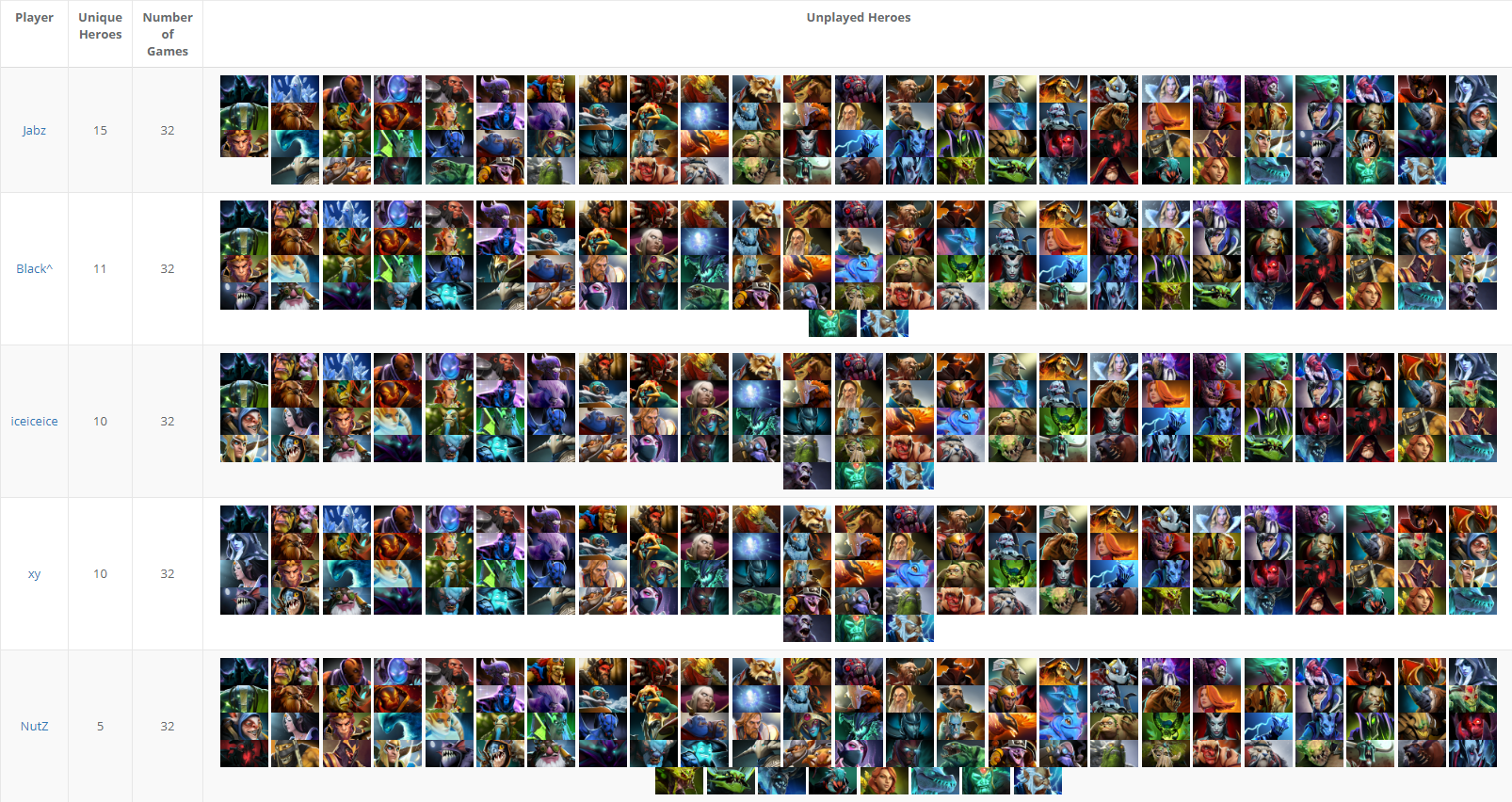
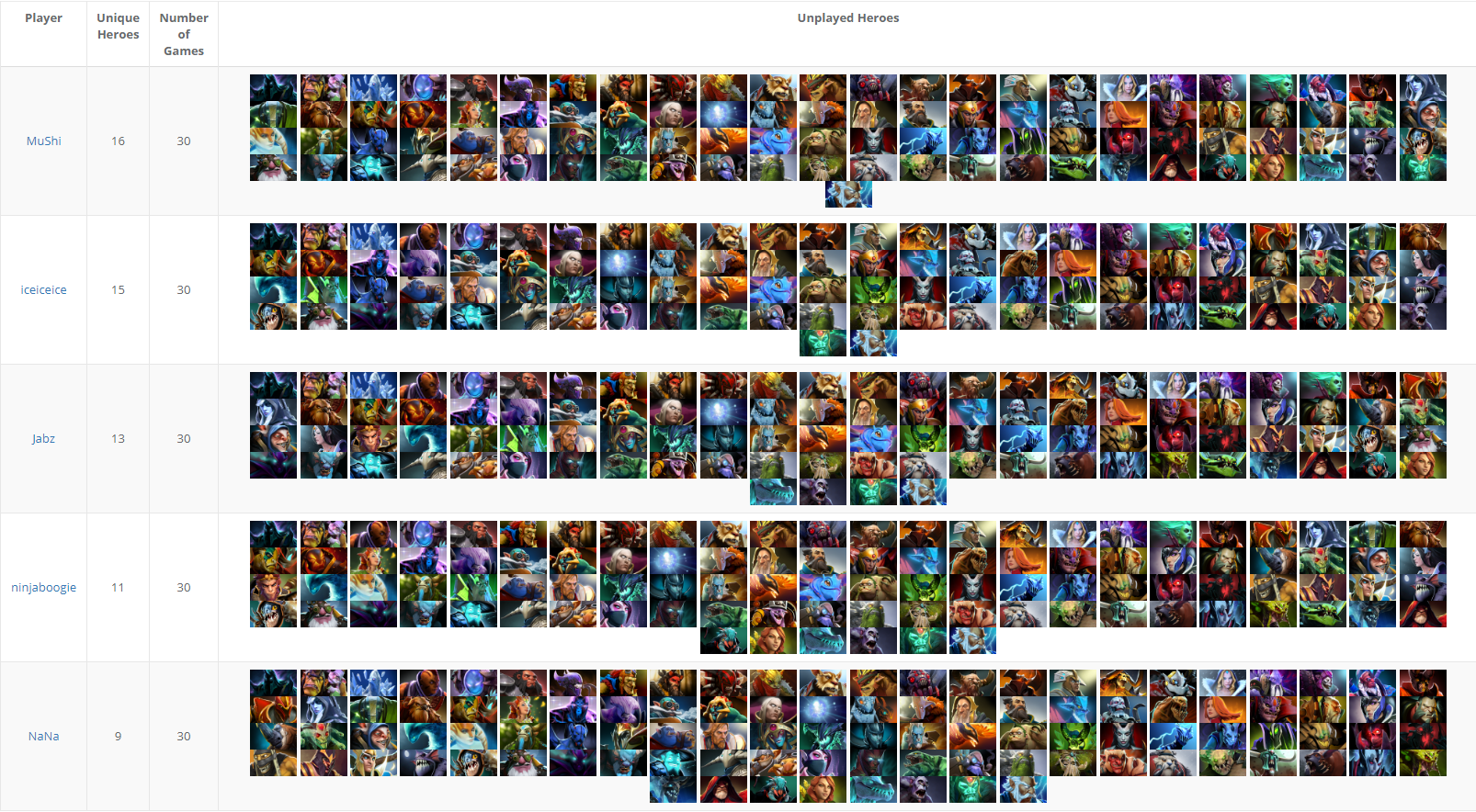
It’s been a challenging month for Mineski, but they have performed consistently well whilst still managing to explore a playstyle for their team. Faceless characteristically stuck a few “tried-and-tested” heroes for their players, and it showed in their pick diversity:
It was clear that Faceless was relying on a few players’ signature heroes to produce results for them once we laid all the cards out on the table. Image credit: datDota
In comparison, Mineski demonstrates much more pick diversity across cores and supports even though they are playing important games (read: qualifiers). Normally, you would see a roster in its infancy repeat multiple comfort picks for their players, but it seems that Mineski is consistently avoiding this bad habit.
Each Mineski player has demonstrated a good level of versatility, with NaNa needing to catch up. Image credit: datDota
Notably, even ninjaboogie maintains a good 11 unique heroes picked in spite of a relatively shallow position 5 hero pool this patch. There are currently 10 – 15 flexible position 5 picks which work well without specific strategies, and we expect that ninjaboogie will pick up on unique heroes once the new patch hits.
We are expecting Mineski to perform much better against international competition given their versatility with heroes whilst still maintaining a good degree of success. This is, after all, 40% of the legendary team DK way back in 2014. One notable point of weakness however, is NaNa, who notably lacks significant international competitive experience.
They Are Elevating Their Competitiveness
According to sources close to the team, Mineski will be going on overseas bootcamps specifically to train with international teams to maintain a higher level of competitiveness. This solves a long-standing issue that South East Asian teams face – the lack of quality scrim opponents that are comparable to international competition – given the dwindling number of regional tournaments and veteran players.
A lack of tournaments also contributes to a longer-term problem: no new players. A Singaporean DOTA 2 pro made the observation that as Singapore’s LAN scene died down, the lack of a place where veterans could mentor new players caused our grassroots scene to lose its competitive edge and community altogether.
Thankfully, the new circuit system looks to be a boon that might be the start of a second sunrise for SEA DOTA 2. Multiple Minor tournaments have already been announced for the region, including one coming up in Singapore in January 2018.
2 Mineski Players Are On A Timer
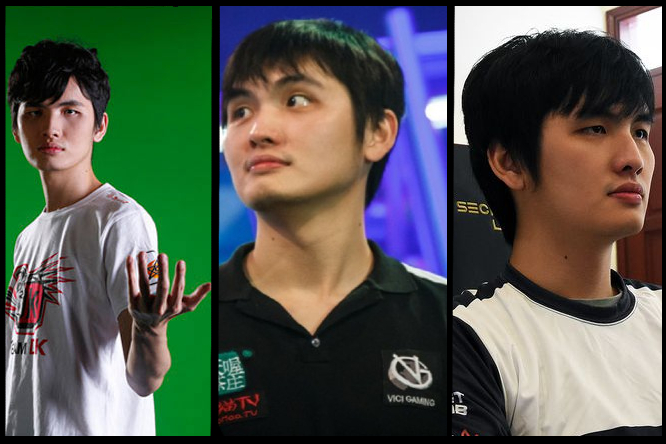
Iceiceice over the recent years: 2014, 2015 and 2017. Image credit: DK, ESL, AsiaOne
Like it or not – SEA’s finest players are aging. It’s nothing dramatic, but time and time again in the history of Dota has proven that younger blood runs hotter. The oldest player to win The International was Clinton “Fear” Loomis at age 27, which both iceiceice and Mushi will be this year.
Age brings experience, and with it, fittingly, fear. Younger players often take risks that make or break games, and oftentimes come out on top, given their confidence. Syed “SumaiL” Sumail Hassan, Amer “Miracle-” al-Barkawi and Anathan “ana” Pham have all made those game-winning plays for their respective teams.
Veteran players tend to play safer, playing to exploit mistakes that their opponents make whilst taking as little risks as possible. LGD at TI4 showed their veteran confidence in their strategy by mounting the largest comeback in The International history. EG at TI6 made a similar showing by holding on through mega creeps against EHOME.
One thing to note was that iceiceice was on both losing teams. Will Mineski change his and Mushi’s luck? Catch Mineski’s first international appearance come the StarLadder i-League invitational on October 12, 9pm SGT!
As you might know by now, the 2017 – 2018 Dota 2 season will be structured by a new circuit system – with points assigned to players who have placed at each new minor and major event. With a The International spot now a reward for putting in the entire year’s work towards it, consistent competitors can expect to reliably “earn” their spot at The International.
But where to start in SEA in particular? Here’s a few starting points and resources that are helpful!
Grinding your MMR
There’s nothing quite like being able to prove yourself by climbing the Matchmaking ladder, and the top Ranked players have since made for great esportsmen. Miracle-, Midone, Gabbi and notably Abed were all MMR grinders – and continue to be even till today – proving that it’s one of the essential steps to going pro.
Not only will you continually improve on your own gameplay by grinding the ladder, you will eventually meet pro players and get noticed by teams once you reach top 100. Get top 10, it’s offers from interested teams. Get top 1, it’s straight to the front for any organisation that might want to make a new esports team.
Starting the climb is also a good way to see if you can make enough impact on your games to go pro – if you’re stuck in 3 or 4k, it’s more than likely you’ll be unable to perform well enough to contribute meaningfully to your potential pro team.
Joining an inhouse league
For quite a few years before its discontinuation, the joinDota League was the bona fide league for any aspiring Dota 2 competitors to cut their teeth on. The league saw player talents like Infamous’s Renato “Kingteka” Canez, Virtus Pro’s Roman “Ramzes666” Kushnarev, Team Liquid’s and TI2017 winner Ivan “MinD_ContRoL” Borislavov go through at least 2 seasons of it.
After a year’s hiatus, jDL season 11 will launch again in October 1, starting its preseason in September 22. You’ll be able to sign up for the preseason up till the 21st, and likewise, 30th for the main league.
Another league being revived is the SEA Inhouse League, which is an entirely community-organised and run league with No MMR requirements. Instead of a structured system, this inhouse acts more as a filter to how toxic SEA MMR is, and as a result the league is currently being run 7pm – 12pm Singapore time on weekdays and 24/7 on weekends.
The Inhouse League uses FaceIT’s automated IHL system to match players with each other, and the few players we’ve asked reported positive experiences playing in the league. If you’re looking for something to introduce yourself to competitive play, perhaps a more friendly environment in the SIL might suit you.
Getting into scrim discords
Perhaps you already have a team, and are raring to test yourself against others. Aside from LAN competitions, Dota 2 teams have their sparring equivalent in scrimmages against each other. It’s also a great place to e-meet a bunch of other players in your region.
You’ll need a discord account to join up. Do read the rules in each discord carefully to avoid getting banned.
Dota 2 scrim (global)
Dota 2 SEA-Oceanic
Dota 2 SIL
Keeping track of all SEA competitive events
Playing on LAN is an entirely different experience compared to playing online. Each player copes differently to the stress when playing on LAN, and local competitions are the best places to start.
The most consistent teams in Dota 2 are able to adapt and play well regardless of their playing environment. We’ve seen the pictures of players like s4 playing through illness on LAN, or even team OG clinching one major win after another in spite of their oscillating overall performances.
Check out our events tabs for the latest esports events in Singapore and our partner, Mineski.net, for Phillippine events!
Asking your local friendly pro
Nothing beats having an actual pro gamer telling you all about how they went pro – it’s a path to success that they’ve proven to work. You can catch both Toh “xy-“ Wai Hong and Wong “NutZ” Jeng Yih on Unikrn and in Singapore’s Alienware Arena on September 19, 2017 talking about their experience as pro players and their own views on the future of the industry.
Given how shy people generally are in SEA, online alternatives such as twitter might also be a good channel to start asking for advice. Do remember that pro players are people too – treat them nicely!
Say hi to me on facebook!
Originally published on Spout360 (site now offline).
Feature Image: All team symbols with a LEAKED word in the middle.
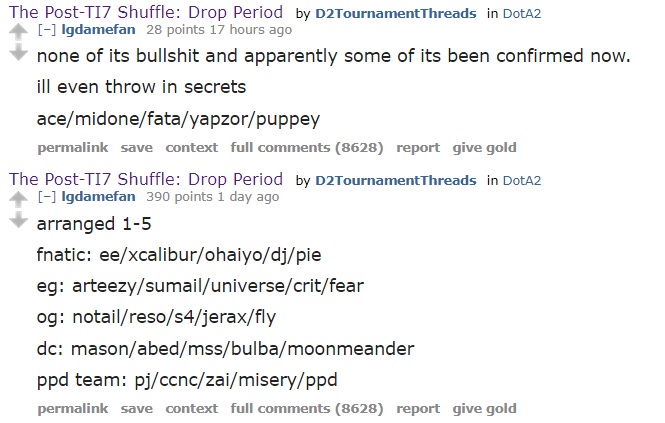
An extensive roster leak on social media website reddit by a throwaway account “lgdamefan” has sent the speculation engines of the Dota 2 community into overdrive.
The leaked rosters are as follows:
Caption: user lgdamefan leaked the rosters on a popular roster speculation thread on reddit / Credit: Reddit.com
Fnatic:
Jacky “EternaLEnVy” Mao
Steve “Xcalibur” Ye
Chong Xin “ohaiyo” Khoo
Djardel Jicko B. “dj” Mampusti
Johan “pieliedie” Åström
Team Secret:
Marcus “Ace” Hoelgaard
Yeik “MidOne” Nai Zheng
Adrian “FATA-” Trinks
Yazied “YapzOr” Jaradat
Clement “Puppey” Ivanov
Evil Geniuses:
Artour “Arteezy” Babaev
Sumail “SumaiL” Hassan
Saahil “UNiVeRsE” Arora
Andreas “Cr1t-“ Nielsen
Clinton “Fear” Loomis
OG:
Johan “N0tail” Sundstein
Roman “Resolut1on” Fominok
Gustav “s4” Magnusson
Jesse “JerAx” Vainikka
Tal “fly” Aizik
Digital Chaos:
Mason “mason” Venne
Abed “abed” Azel Yusop
Arif “MSS” Anwar
Kanishka “BuLba” Sosale
David “MoonMeander” Tan
PPD’s Team:
Per Anders Olsson “Pajkatt” Lille
Quinn “CCnC” Callahan
Ludwig “zai” Wåhlberg
Rasmus “MiSeRy” Filipsen
Peter “ppd” Dager
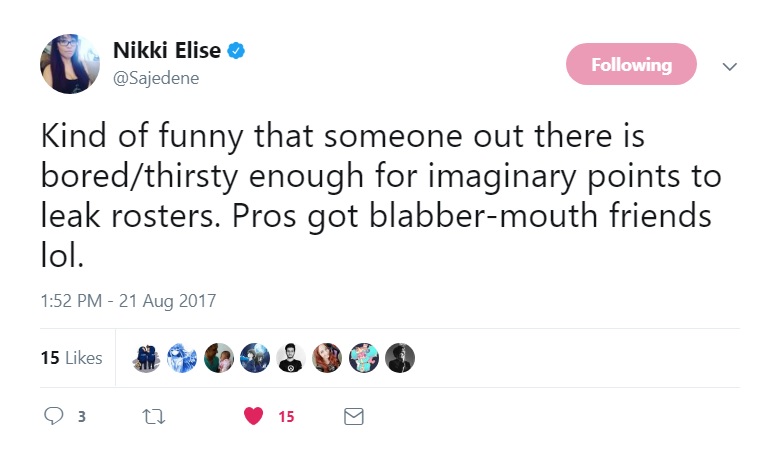
There were also reactions from prominent community figures due to the leaks. Ex-Digital Chaos Manager and esports agent Nikki “Sajedene” Elise condemned the leak on twitter, saying:
“Kind of funny that someone out there is bored/thirsty enough for imaginary points to leak rosters. Pros got blabber-mouth friends lol.”
Caption: Community figure Sajadene voiced her disapproval, which was echoed by several other community members. Credit: Twitter
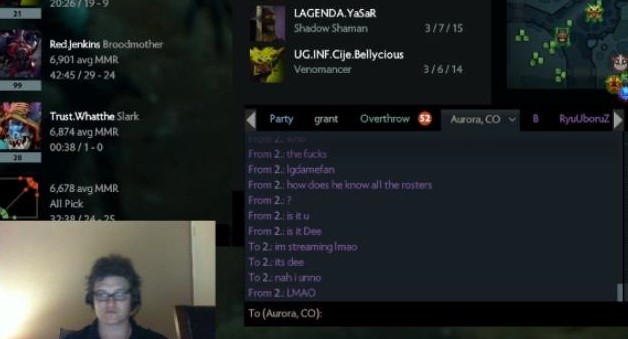
We also saw pro player BuLba reacting to the leaks through caster and streamer Grant “GranDGranT” Harris yesterday. Here is the conversation, transcribed:
BuLba (2.): who the fucks / lgdamefan / how does he know all the rosters? Is it u / is it Dee /
GranDGranT: im streaming lmao / its dee / nah i unno
BuLba: LMAO
Caption: A viewer screencap during streamer GranDGranT’s stream of the conversation between him and pro player BuLba, shortly after the leak / Credit: Twitch
According to a viewer, the stream was quickly cut after this exchange.
As Dota 2 esports starts to gain momentum, roster leaks are a nightmare for organisations as lineup reveals provide a prime opportunity to promote the sponsors that support them. In the recent TNC reveal, we see their major sponsor, Predator, being prominently promoted by the team.
If leaks remove the hype and thus audience which the sponsors are promised, organisations like Fnatic and Evil Geniuses might impose stricter non-disclosure agreements on players to protect their own interests.
On the flipside, part of the fun of being in esports is how casual and loose information is kept secret, which enables such roster speculation to occur. Diehard fans are able to find bits and pieces of information from streams and social media to speculate on, which tides the community over an otherwise dry roster shuffle season.
What do you think about roster leaks? How far is too much? What’s a fair compromise for brands and the Dota 2 community? Speak to us on facebook or in the comments!
Say hi to the author over at www.facebook.com/Freakofnatur!
Originally published on Spout360 (site now offline).
Of all the names in Dota 2, there are those which you hear all the time. Dendi. Navi, Evil Geniuses, Fnatic, are some household names which are constantly repeated. However, there are always those names which stand silently in the background.
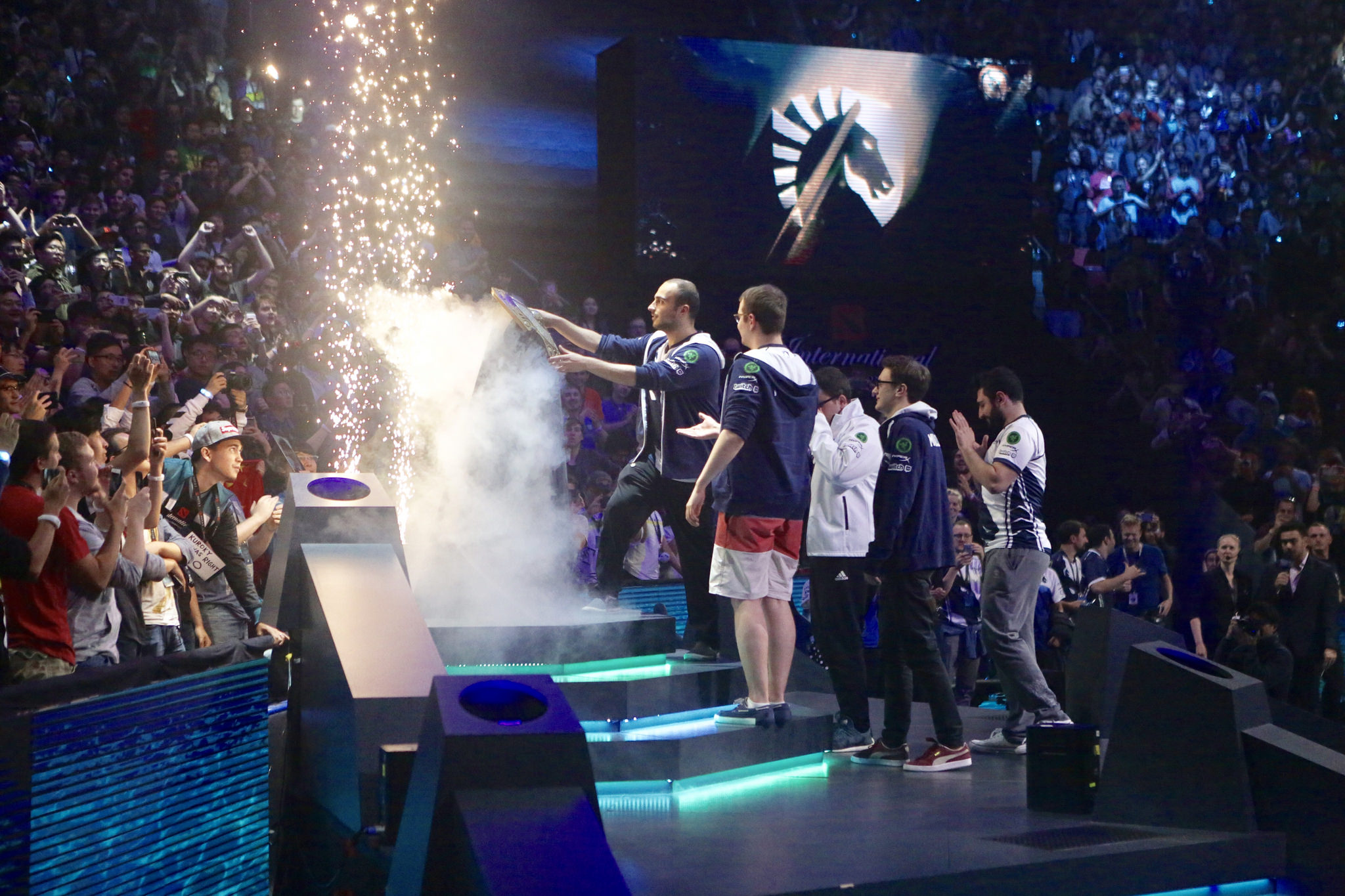
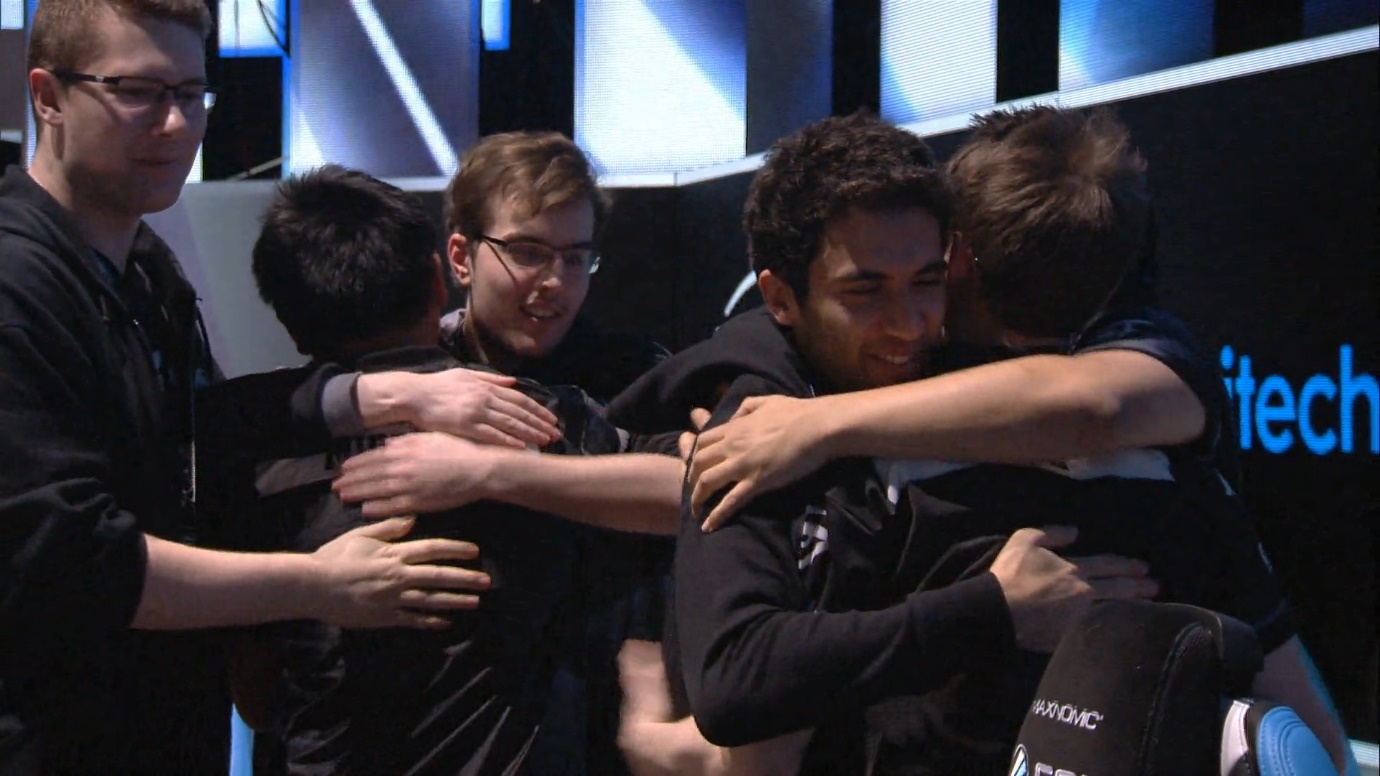
Kuro “KuroKy” Salehi Takhasomi is one such name. This year, he led Team Liquid’s young team all the way to become this year’s The International champions with just three things: Consistency, Legacy and Creativity.
Consistency
Every star in Dota 2 has a storied past. Jacky “EternaLEnVy” Mao posted on the Team Liquid forums that he was going to quit Engineering Science before beginning his progaming journey with Cloud9. Artour “Arteezy” Babaev’s first ever stream post can still be found on reddit.
KuroKy is no different. His turn towards leadership could be seen in his blog on gosugamers, made back in June 2011. In the blog, he details his current esports career in Dota, how he nearly gave it all up, as well as what turned him from quitting.
One particular quote stands out from the entire blog:
Caption: This particular quote encapsulated Kuro’s never-say-die attitude. Credit: Gosugamers
Team Liquid’s playstyle throughout 2017 reflected the same stubborn tendency that KuroKy expressed and subsequently demonstrated in persisting with his esports career. The team gravitated towards pushing strategies which many perceived was a weakness – similar to OG’s constant reliance on split push strategies.
Liquid’s strategy involves them building up map advantages and teamfighting items through the laning stage, and immediately transitioning into the doom push. Lone Druid, Nature’s Prophet, Lycan and Necrophos enabled such strategies, as they provided the additional health needed to sustain the push.
To explain this briefly, Lone Druid’s Spirit Bear, Nature’s Prophet Treants, Lycan’s Howl and Dire Wolves as well as Necrophos’s Death Pulse provides either healing or summons to tank tower hits so that the team can outlast the enemy in extended fights around towers or other objectives.
Combine this with a great laning stage secured by lane dominating cores and supports, and you have an unstoppable push.
Team Liquid was perfecting this strategy since the start of the year, and, similar to Alliance at TI3, they were nearly unstoppable in their journey towards 1st place at The International. Having a strong team identity gave each player the confidence to play out every game to their best ability, and it showed as Liquid recovered after being upset by Invictus Gaming in the Upper Bracket.
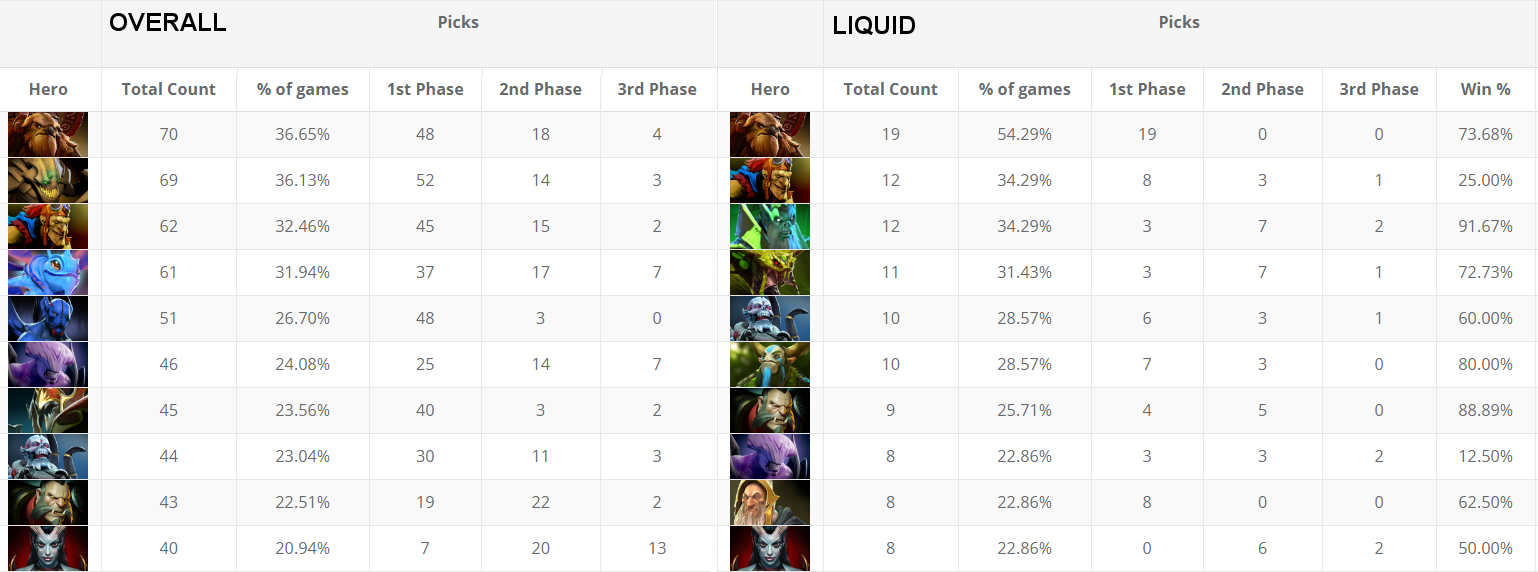
KuroKy showed his own confidence in his strategy, not swaying to the tournament meta. If we compare the top 10 picks by Liquid to the overall top 10 picks at TI7, the stark difference tells the whole story:
Caption: The difference in overall picks at TI7 vs Liquid’s priority picks. Credit:datdota
Earthshaker aside, Liquid’s top 5 core picks are midgame teamfight dominators, which is the timing which Liquid wants to win by. The low deviation (8-12) of picks from Liquid across these cores shows both preparedness (in case of bans on their ideal picks) as well as an uncommon belief that their singular game plan will work.
Legacy
6 out of the 10 Dota 2 veterans who had previously attended every TI missed this year’s TI. The four players that remain are: Leong “DDC” Fat-meng, Clement “Puppey” Ivanov, Saahil “UNiVeRsE” Arora and KuroKy. This gives him a level of respect other leaders might not automatically enjoy; you simply do not doubt the words of a 9-year pro veteran.
Caption: Kuro with Hot_Bid at The Summit 3, while he was still with Team Secret/ Credit: Beyond The Summit
In an interview at Summit 3 with Ken “Hot_Bid” Chen, KuroKy said, “I learn [something] everyday.” Compared to his teammates, KuroKy is a weathered veteran who had a lifetime of lessons to learn from. In an Interview with Cybersport.ru, KuroKy expressed that he learns a lot from his losses, with his most memorable loss being TI3’s loss against Alliance.
The lessons from losing gives KuroKy a unique confidence as a leader which is borne from experience. Being able to say, “I’ve been here before” with teammates Lasse “MANTUMBAMAN” Urpalainen and Ivan “MinD_ContRoL” Borislavov also creates this mutually reinforcing environment of confidence – one that new teammates Amer “Miracle-“ Al-Barkawi and Maroun “GH” Merhej will be positively influenced by.
At TI7, in the winner’s interview after facing Team Secret, KuroKy told Kaci that “In the third game [against secret] we were like, should we do it again? we wanted to … or at least I wanted to show some sort of confidence in our strategy and we have GH who is arguably one of the best player on [Keeper of the Light]”.
Even though Team Liquid’s current roster is still relatively fresh, KuroKy’s faith in his Team’s short legacy gives rise to each player becoming more confident in each other’s, as well as their own, gameplay. This was a mainstay in Liquid’s successful all-in style pushes as each Team Liquid member was on the same exact page on how they wanted to win the game.
Creativity
Even though Liquid’s main event drafts had very little variance, their gameplay was far from dull. Liquid displayed mastery over their heroes with incredible decision making in their item builds as well as ganking patterns.
In the TI7 semi-final game against LFY, MATUMBAMAN showed why he was infamous for his Lone Druid throughout Liquid’s dominant run from DreamLeague Season 6 and 7, EPICENTER and StarLadder i-League. By picking up Aghanim’s Scepter when he realised they could not win straight up teamfights, he actually gave his team a chance to win even from a 28 – 8 scoreline.
Each Liquid team member reacts incredibly well to the game state despite their adherence to the overarching push strategy, proving that their MMR is more than just a number with great predictive plays and solo calls. Given how complex Dota 2 is, most movement calls and item purchases are not made by the captain, but by the player who is most suitable to do it.
For example, MATUMBAMAN might be the person who decides when the team is able to teamfight (as he will be the one dealing the damage) alongside Miracle-, and GH or MinD_ContRoL might be the one to call out early game ganks so that MATUMBAMAN can farm safely.
A team that can think on their own for the micro plays is much more able to accommodate strategy and higher-level stuff, as revealed by Kips through her workshop. We believe that Liquid had leg up on everyone regarding strategy except VP, LFY and Newbee, but even they were overcome eventually.
Caption: In its 7 years of competition, there has never been a repeat TI winner / Credit: dota2 wiki
For Team Liquid and KuroKy, all eyes will be on them to do well in the next season of Dota 2. However, with MATUMBAMAN rumoured to be due for military service, the TI curse might not be the only wrench in the works that they will have to deal with.
Talk to me about my articles over at www.facebook.com/Freakofnatur!
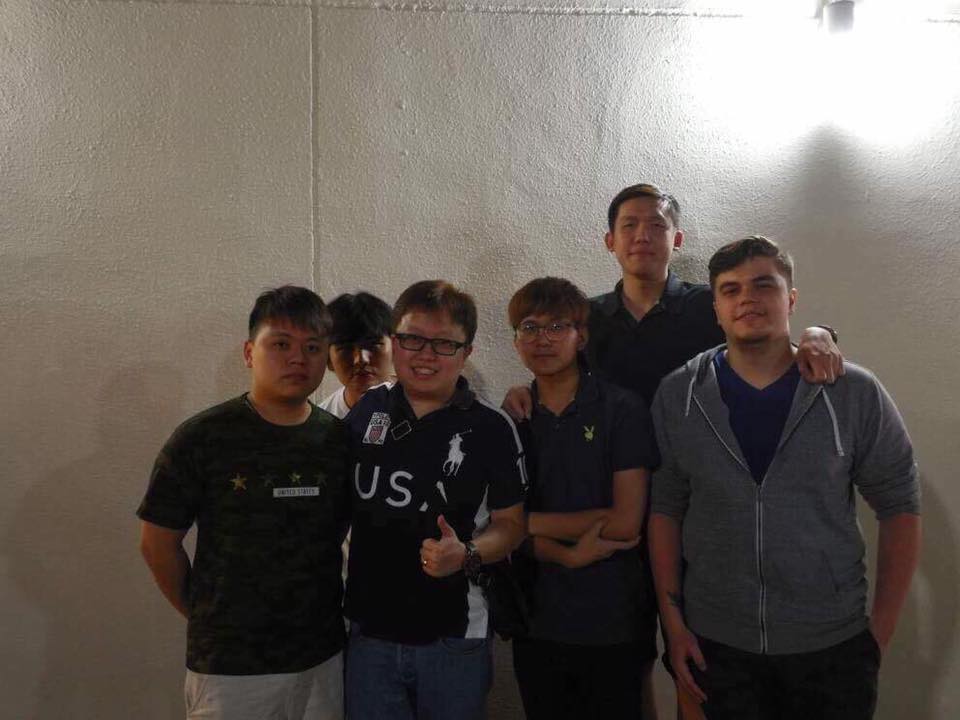
The SEA gods have risen once again to meet the next season of Dota 2. Mineski Dota has just confirmed that their post-TI shuffle roster will consist of Mushi, Nana, Iceiceice, Jabz and Ninjaboogie.
This leaves Ark, Mag and ryOyr open to other teams. While both Ark and Mag were expected to part ways, ryOyr leaving comes as a surprise, given how he was picked up together with ninjaboogie.
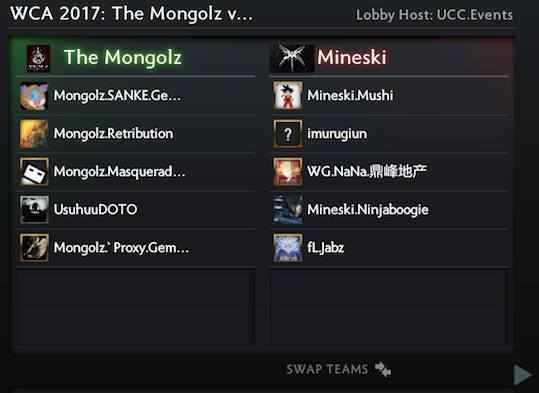
In the months leading up to TI, this exact roster was seen playing together in the WCA 2017 qualifiers.
I guess we all now know who really was “imurugiun” and “Lucifer” all this time.
Mineski Dota Lineup:
Chai “Mushi Yee Fung
Kam “Nana” Boon Seng
Daryl “iceiceice” Koh Pei Xiang
Anucha “Jabz” Jirawong
Michael “ninjaboogie” Ross Jr.
Say hi to me over at www.facebook.com/freakofnatur!
Originally published on Spout360 (site now offline).